Boiler Tube
Product Overview
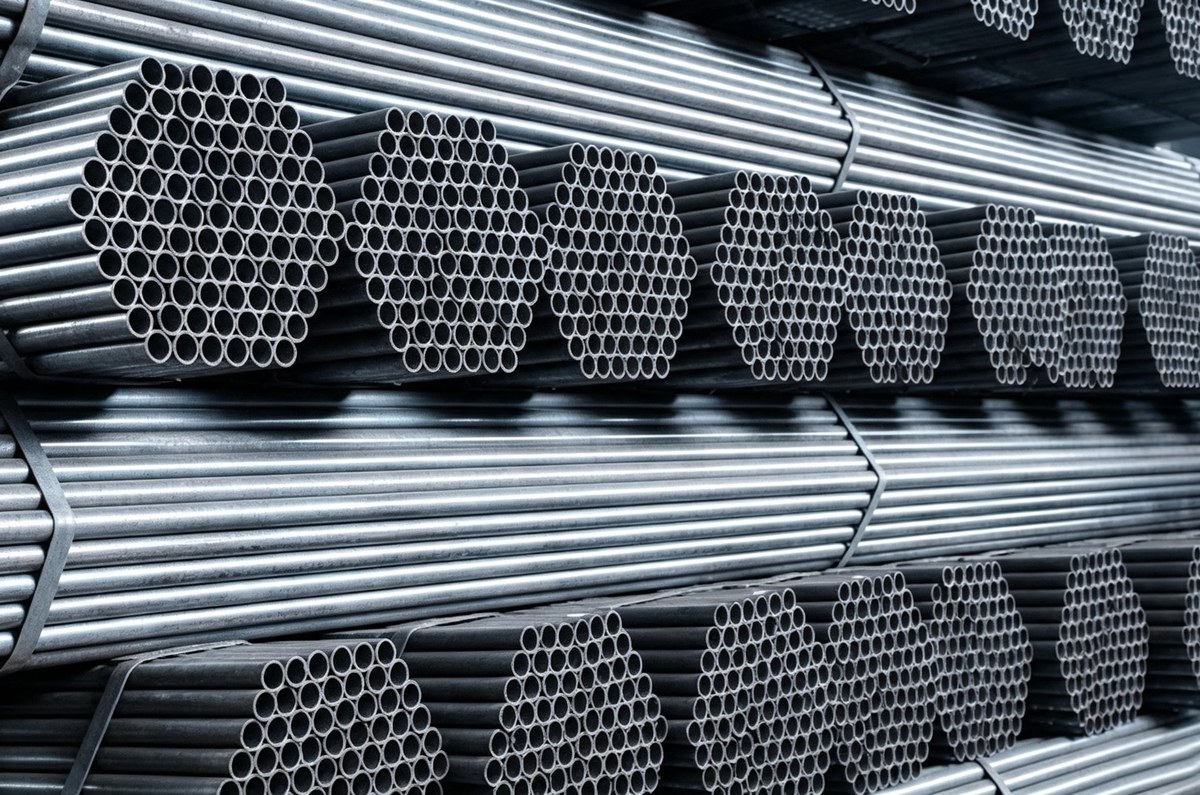
Boiler tubes are specialized steel tubes designed for heat transfer and fluid conveyance in boilers, heat exchangers, condensers, and other thermal equipment. Unlike standard line pipe or OCTG products, boiler tubes must withstand sustained high temperatures, high internal pressures, and thermal cycling while maintaining efficient heat transfer.
The fundamental distinction between boiler tubes and pipes lies in their function: tubes are designed for both heat transfer and fluid conveyance, whereas pipes serve only for conveyance. Tubes are manufactured with closer dimensional tolerances and lower carbon content to facilitate bending and welding.
Product Types
1 Conventional Boiler Tubes (Plain Tubes)
Standard seamless or welded tubes used in boiler water walls, furnace walls, and general heat exchange applications. These are the most common boiler tube products.
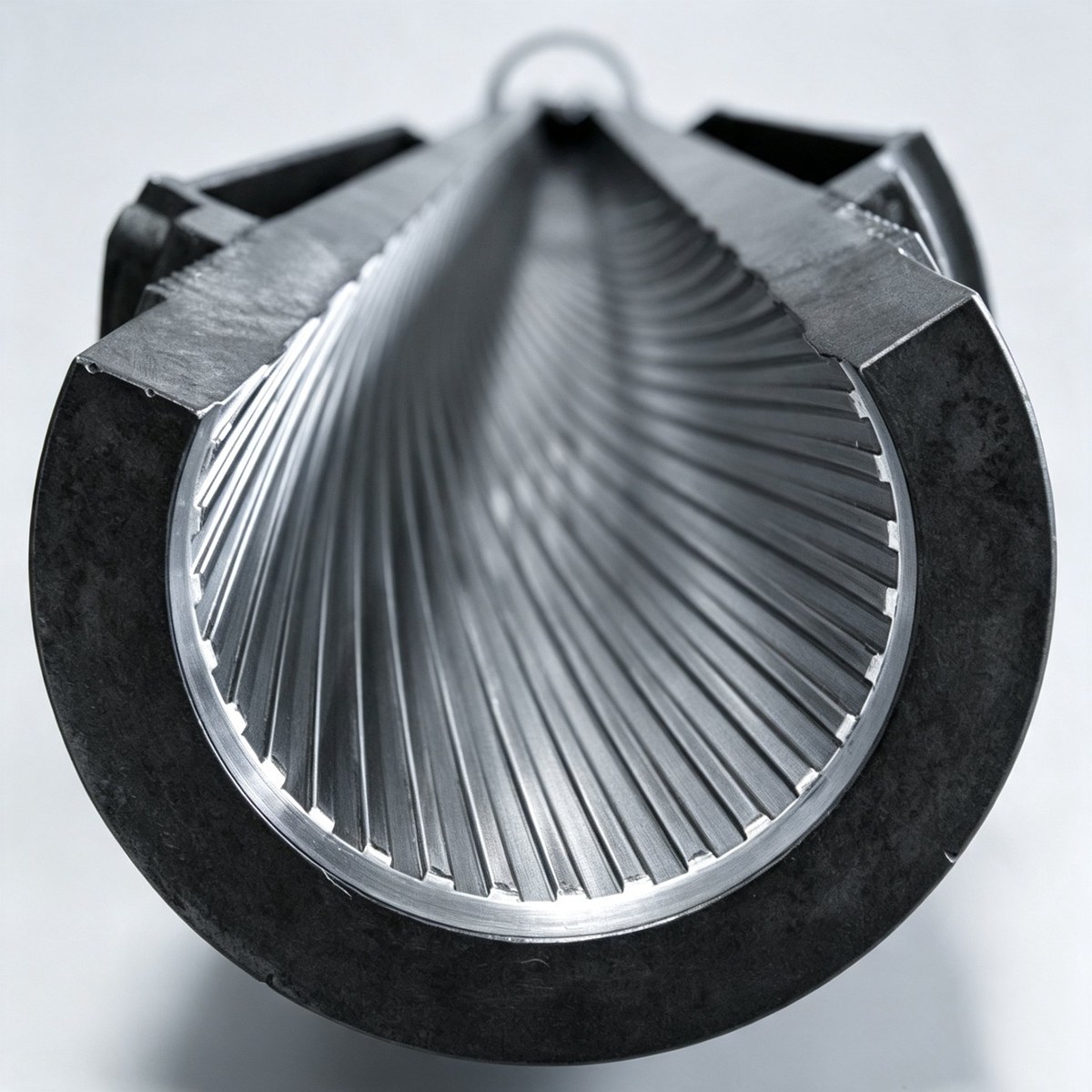
2 Internal Rifled / Ribbed Tubes
Tubes with spiral ribs on the internal surface that enhance heat transfer efficiency by promoting turbulence in the fluid flow. Widely used in subcritical and supercritical boiler water walls to suppress film boiling and prevent tube overheating.
3 HRSG Tubes (Heat Recovery Steam Generator)
Specialized tubes used in combined cycle power plants to recover waste heat from gas turbine exhaust. These tubes must withstand thermal cycling and often utilize finned surfaces for enhanced heat recovery efficiency.
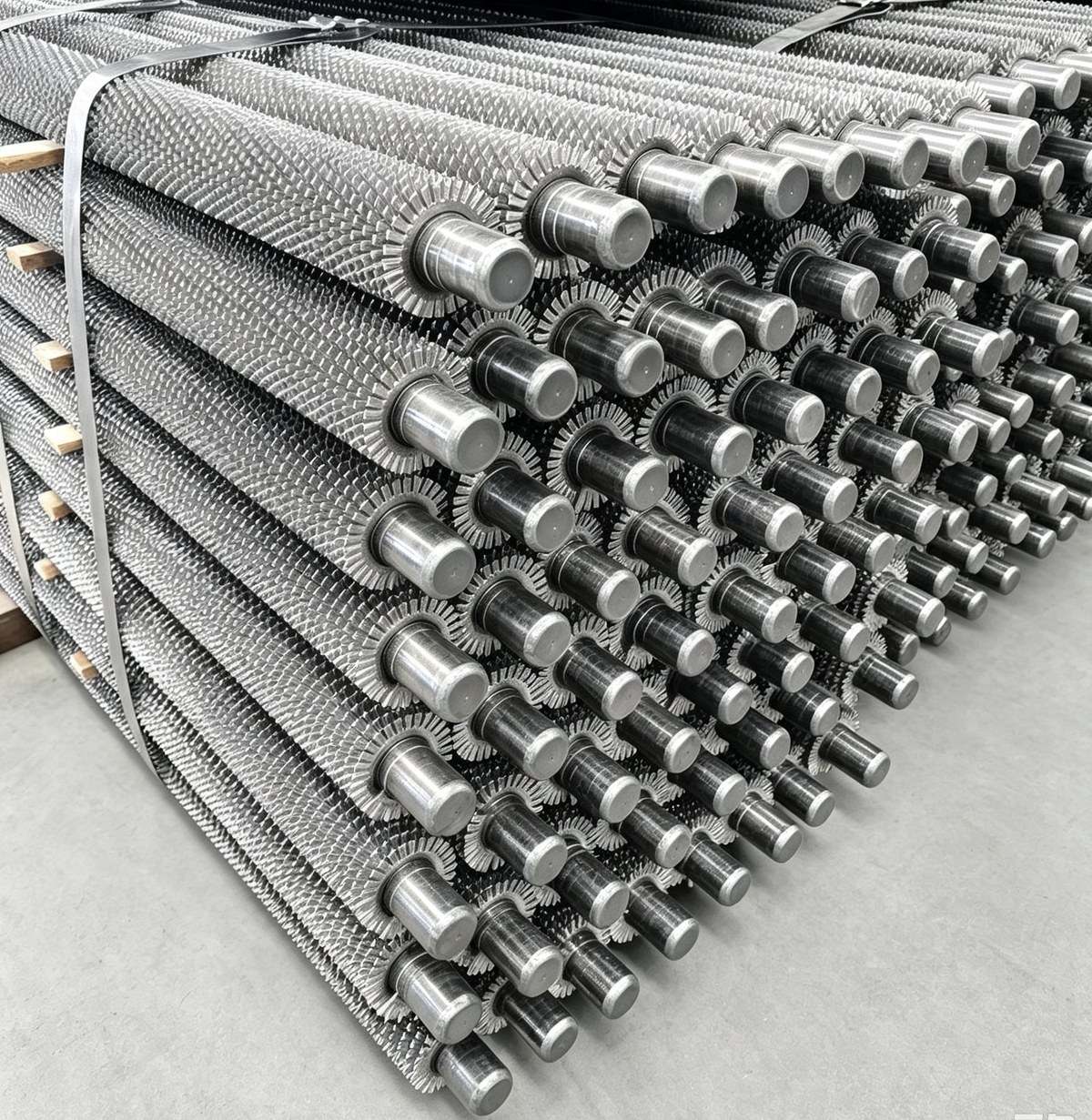
4 Finned Tubes
Tubes with extended surfaces (fins) welded or integrally formed on the outer surface. Types include:
- Spiral Finned Tubes: Continuous helix fins for maximum surface area
- Serrated Finned Tubes: Enhanced fin geometry for improved heat transfer
- Studded Tubes: Studs welded to the surface for specialized applications
5 Header / Manifold Pipes
Large-diameter pipes used in boiler systems to collect and distribute steam and water. Headers connect multiple tubes and require high-strength materials to withstand thermal and pressure stresses.
6 Heat Exchanger Tubes
Tubes specifically designed for shell-and-tube heat exchangers, featuring precise dimensional tolerances and smooth internal surfaces to optimize heat transfer efficiency.
7 High-Pressure Drum Tubes
Thick-walled tubes used in boiler drums where steam and water separation occurs. These require superior mechanical properties and strict quality control.
8 Condenser Tubes
Tubes used in surface condensers to condense exhaust steam from turbines. Typically manufactured with corrosion-resistant materials including stainless steel, titanium, and copper-nickel alloys.
9 Gas Turbine Tubes
Specialized tubes for gas turbine exhaust systems and recuperators, requiring high-temperature oxidation resistance.
Manufacturing Processes
1 Seamless Tubes
- Produced by piercing solid billets through processes including:
| Process | Size Range | Features |
|---|
| Mandrel Mill | Up to 340 mm OD | High-volume production with consistent quality |
| Plug Mill | Up to 406 mm OD | Suitable for larger diameters |
| Pilger Mill | Up to 700 mm OD | Best for large diameters (325 mm+), versatile but slower |
| Push Bench (CPE) | Up to 178 mm OD | Cost-effective for medium sizes |
| Extrusion | Up to 260 mm OD | Suitable for special alloys, higher cost |
2 Electric Resistance Welded (ERW) Tubes
- Produced by folding and welding steel strip. ERW tubes offer:
- Smoother internal surface resulting in lower pressure drop
- Better bore concentricity (superior for tube expansion)
- Lower cost, especially for thinner walls
- Virtually identical physical and chemical properties to seamless tubes
Materials
1 Carbon Steel
| Grade | Standard | Temperature Range | Applications |
|---|
| ASTM A179 | Seamless cold-drawn low-carbon steel | Moderate temp. | Heat exchangers, condensers |
| ASTM A192 / ASME SA192 | High-pressure seamless carbon steel | Up to ~400°C | Boiler and superheater tubes |
| ASTM A210 (A-1 / C) | Medium-carbon steel | Up to ~400°C | Boiler, superheater, and economizer tubes |
| ASTM A106 (Gr. B / C) | High-temperature carbon steel | Up to ~400°C | Refinery and power plant piping |
| EN 10216-2 P235GH / P265GH | Carbon steel for pressure | –20°C to 400°C | General pressure applications |
2 Low-Alloy / Chrome-Moly Steel
| Grade | Standard | Temperature Range | Applications |
|---|
| 16Mo3 (1.5415) | EN 10216-2 | Up to 500°C | Medium-temperature service |
| 13CrMo4-5 (P11) | ASTM A335 / EN 10216-2 | Up to 550°C | Superheaters, reheaters |
| 10CrMo9-10 (P22) | ASTM A335 / EN 10216-2 | Up to 575°C | High-temperature headers and piping |
| X11CrMo5-1 (P5) | ASTM A335 | Up to 600°C | Elevated temperature service |
| X11CrMo9-1 (P9) | ASTM A335 | Up to 600°C | Refinery and power generation |
3 High-Strength Creep-Resistant Steels
| Grade | Standard | Temperature Range | Applications |
|---|
| T91 / P91 (9Cr-1Mo-V) | ASTM A213 / A335 | Up to 625°C | Superheaters, reheaters, sub/super-critical units |
| P92 (9Cr-0.5Mo-1.8W-V) | ASTM A335 | Up to 650°C | Ultra-supercritical units |
| T23 (2.25Cr-1.6W-V) | ASTM A213 | Up to 600°C | Water walls, superheaters |
| T24 (7Cr-0.5Mo-0.2V) | ASTM A213 | Up to 600°C | Water walls, improved creep properties |
Note: Grade T91/P91 demonstrates superior creep rupture strength (157 MPa at 600°C for 105 hours) and replaces 18-8 series austenitic steels in many applications.
4 Austenitic Stainless Steel
| Grade | Standard | Temperature Range | Applications |
|---|
| TP304 / 304H | ASTM A213 | Up to 800°C | Superheaters, high-temperature service |
| TP316 / 316H | ASTM A213 | Up to 800°C | High-temperature corrosive environments |
| TP321 / 321H | ASTM A213 | Up to 850°C | High-temperature service, thermal cycling |
| TP347H | ASTM A213 | Up to 850°C | High-temperature superheaters, thermal stress resistance |
5 Nickel-Base Alloys
| Alloy | UNS | Temperature Range | Applications |
|---|
| Alloy 740 (N07740) | Age-hardened Ni-base | Up to 700°C+ | Advanced ultra-supercritical (AUSC) units |
| Inconel 625 | N06625 | Up to 980°C | High-temperature corrosive environments |
| Incoloy 800H / 800HT | N08810/N08811 | Up to 982°C | Superheaters, reheaters, nuclear components |
Nickel-base alloys are essential for AUSC applications where conventional ferritic and austenitic tubes require unrealistically large wall thicknesses at temperatures and pressures above 700°C.
6 Low-Temperature Nickel Steels
| Grade | Standard | Temperature Range | Applications |
|---|
| P215NL / P265NL | EN 10216-3/4 | Down to –50°C | Low-temperature pressure service |
| P355NL1 / NL2 | EN 10216-3 | Down to –50°C | Low-temperature pressure vessels |
| X10Ni9 (9% Ni Steel) | EN 10216-4 | Down to –196°C | Cryogenic applications, LNG |
| 12Ni14 | EN 10216-4 | Down to –196°C | Cryogenic service |
7 Material Comparison Summary
| Property | Carbon Steel | Cr-Mo Alloy | Stainless Steel | Nickel Alloy |
|---|
| Thermal Conductivity | Good | Moderate | Lower | Low |
| Corrosion Resistance | Low | Moderate | High | Excellent |
| High-Temp Strength | Up to ~400°C | Up to ~650°C | Up to ~850°C | Up to 700°C+ |
| Key Standards | A179, A192, A210 | A213, A335 | A213, A249 | Special specifications |
Applicable Standards
1 American Standards (ASTM / ASME)
| Standard | Description |
|---|
| ASTM A179 / ASME SA179 | Seamless cold-drawn low-carbon steel heat exchanger and condenser tubes |
| ASTM A192 / ASME SA192 | Seamless carbon steel boiler tubes for high-pressure service |
| ASTM A210 | Seamless medium-carbon steel boiler and superheater tubes |
| ASTM A213 / ASME SA213 | Seamless ferritic and austenitic alloy-steel boiler, superheater, and heat exchanger tubes |
| ASTM A249 | Welded austenitic steel boiler, superheater, heat exchanger, and condenser tubes |
| ASTM A106 / ASME SA106 | Seamless carbon steel pipe for high-temperature service |
| ASTM A335 / ASME SA335 | Seamless ferritic alloy-steel pipe for high-temperature service |
2 European Standards (EN)
| Standard | Description |
|---|
| EN 10216-1 | Seamless steel tubes for pressure purposes – Technical delivery conditions – Part 1: Non-alloy steel tubes with specified room temperature properties |
| EN 10216-2 | Seamless steel tubes for pressure purposes – Part 2: Non-alloy and alloy steel tubes with specified elevated temperature properties |
| EN 10216-3 | Seamless steel tubes for pressure purposes – Part 3: Alloy fine grain steel tubes |
| EN 10216-4 | Seamless steel tubes for pressure purposes – Part 4: Low alloy steel tubes with specified low temperature properties |
| EN 10216-5 | Seamless stainless steel tubes for pressure purposes |
3 Chinese Standards (GB)
| Standard | Description |
|---|
| GB/T 3087 | Seamless steel tubes for low and medium pressure boilers |
| GB/T 5310 | Seamless steel tubes for high-pressure boilers |
| GB/T 6479 | Seamless steel tubes for high-pressure chemical equipment |
| GB/T 13296 | Seamless stainless steel tubes for boilers and heat exchangers |
4 German Standards (DIN)
| Standard | Description |
|---|
| DIN 17175 | Seamless steel tubes for high-temperature service (superseded by EN standards) |
5 Japanese Standards (JIS)
| Standard | Description |
|---|
| JIS G3461 | Carbon steel boiler and heat exchanger tubes |
| JIS G3462 | Alloy steel boiler and heat exchanger tubes |
Full Range of Specifications
1 Outside Diameter (OD) Range
| Size Category | OD (mm) | OD (inches) | Typical Applications |
|---|
| Small Diameter | 13.5 – 60.3 | 1/2 – 2 3/8 | Instrumentation, heat exchangers |
| Medium Diameter | 63.5 – 168.3 | 2 1/2 – 6 5/8 | Superheaters, reheaters, water walls |
| Large Diameter | 177.8 – 355.6 | 7 – 14 | Headers, drums, high-pressure piping |
| Extra Large | 406.4 – 711 | 16 – 28 | Steam piping, large headers |
| Ultra Large | 762 – 1,000+ | 30 – 40+ | Main steam piping, power plant headers |
2 Wall Thickness Range
Available wall thicknesses typically range from 1.8 mm to 60 mm, depending on diameter, material, and service conditions.
3 Lengths
| Length Type | Range | Application |
|---|
| Fixed Length | 5.8 m, 6.0 m, 11.8 m, 12.0 m | Standard production |
| Single Random Length (SRL) | 5.0 – 7.0 m | General applications |
| Double Random Length (DRL) | 10.0 – 14.0 m | Reducing field welds |
| Extended Length | Up to 30 m | Maximum available – special order |
Shapes and Configurations
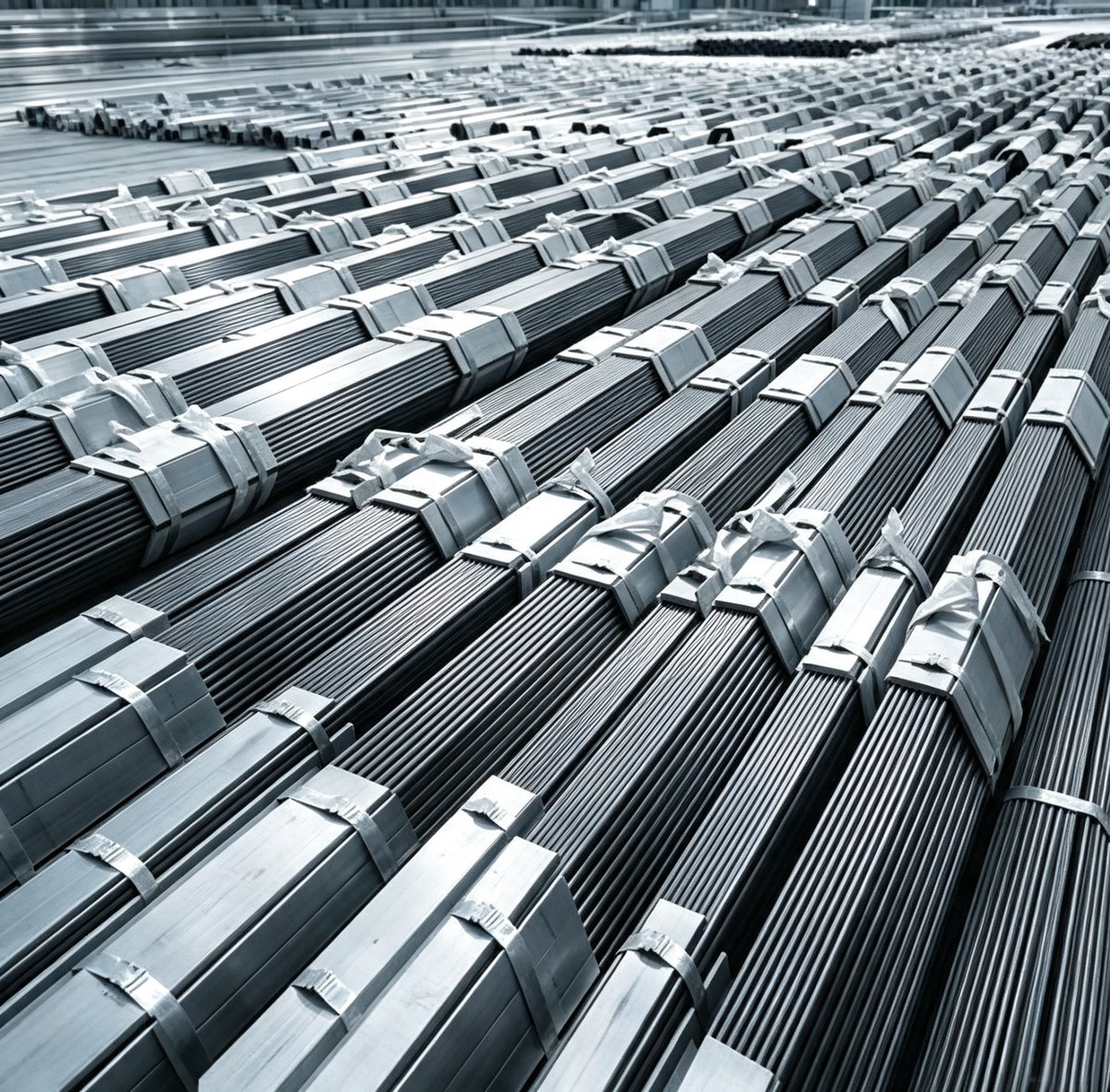
1 Straight Tubes
- Standard configuration for most boiler and heat exchanger applications. Available as:
- Hot-Finished (HFS): Standard tolerance, lower cost
Cold-Drawn (CDS): Closer tolerance, preferred for superheaters and reheaters where tolerance impacts performance
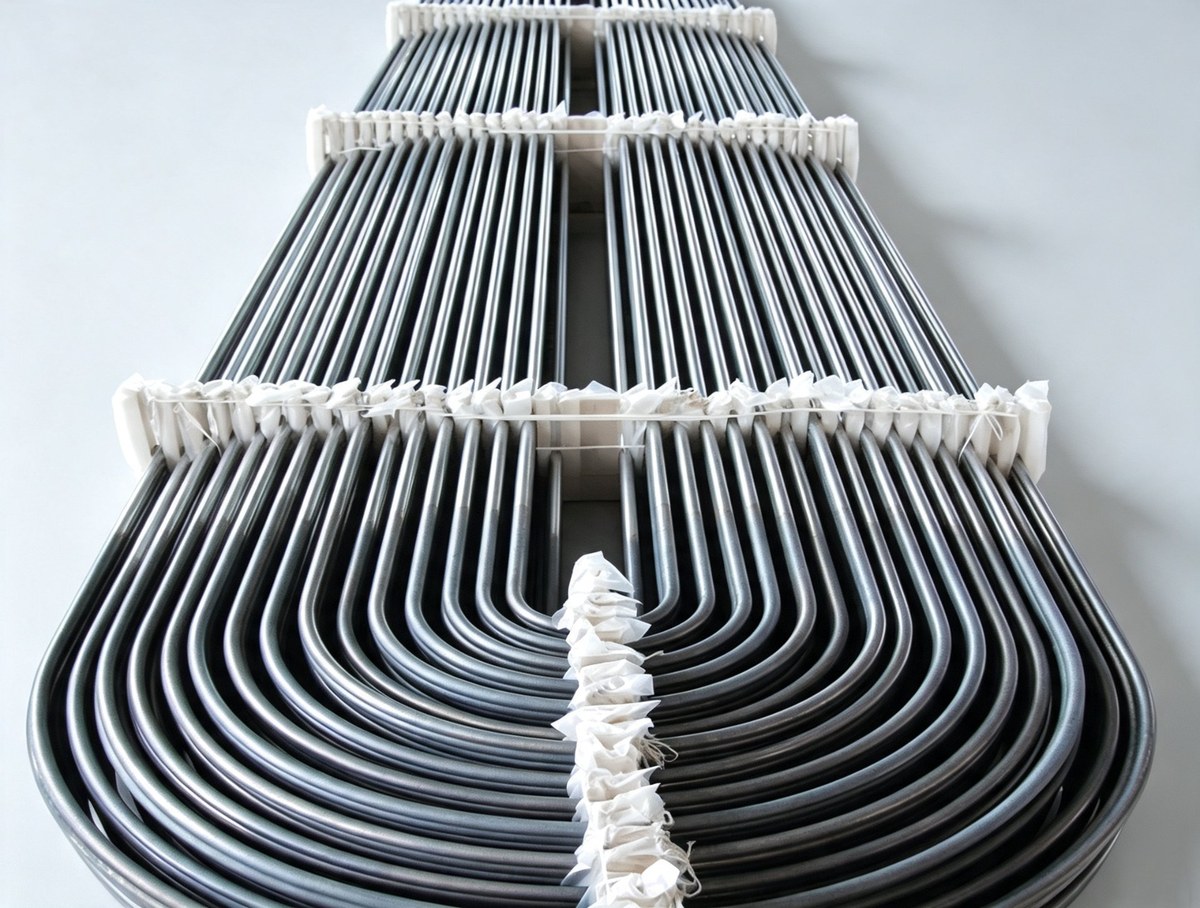
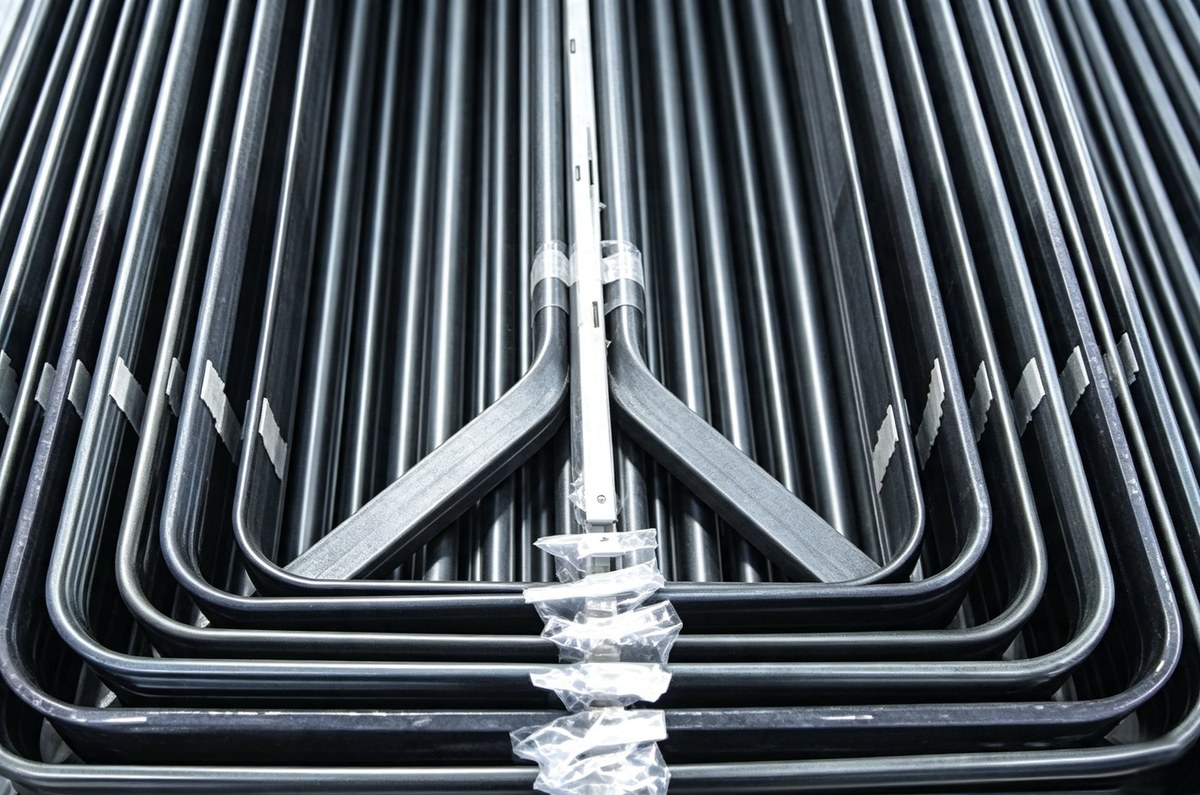
2 U-Bent Tubes
Tubes bent into U-shapes for heat exchangers and certain boiler configurations. U-bending requires materials with good ductility and consistent wall thickness.
3 Serpentine / Coil Tubes
Continuously bent tubes arranged in serpentine patterns for maximum heat transfer surface in confined spaces.
4 Custom Bends
Tubes can be bent to customer-specified radii and configurations for specialized boiler and heat exchanger designs. Materials with lower carbon content are preferred for tighter bending.
Service Conditions
1 Low-Temperature Service
| Condition | Temperature Range | Typical Applications |
|---|
| Low-Temperature Service | –50°C to 0°C | Economizers, low-pressure sections |
| Cryogenic Service | –196°C to –50°C | LNG, specialized applications |
- Materials: P215NL, P265NL, P355NL, X10Ni9 (9% Ni steel)
2 Medium-Temperature Service
| Condition | Temperature Range | Typical Applications |
|---|
| Medium-Temperature | 0°C to 400°C | Water walls, economizers, low-pressure boilers |
- Materials: A179, A192, P235GH, P265GH
3 High-Temperature Service
| Condition | Temperature Range | Typical Applications |
|---|
| High-Temperature | 400°C to 600°C | Superheaters, reheaters, high-pressure sections |
- Materials: P11, P22, 16Mo3, T91
4 Supercritical / Ultra-Supercritical (USC/AUSC)
| Condition | Temperature Range | Typical Applications |
|---|
| Supercritical (SC) | Up to 600°C | Modern coal-fired units |
| Ultra-Supercritical (USC) | Up to 650°C | Advanced power plants |
| Advanced Ultra-Supercritical (AUSC) | >700°C | Next-generation plants |
Materials: T91/P91, T92/P92, austenitic stainless steels (304H, 321H), nickel-base alloys (Alloy 740)
5 Nuclear Service
| Application | Requirements |
|---|
| Nuclear Power Components | Long-term radiation environment reliability, stringent quality control, specific nuclear-grade material certifications |
- Materials: Nuclear-grade austenitic stainless steels and nickel alloys
Surface Treatments and Finishes
| Finish Type | Description |
|---|
| Bare / Plain | Standard as-rolled finish |
| Lightly Oiled | Temporary corrosion protection during storage and transport |
| Black / Red / Yellow Painting | Color-coded protective coatings for identification and corrosion protection |
| Zinc / Anti-corrosive Coating | Enhanced corrosion protection for longer storage or aggressive environments |
| Polished Surface | Smooth internal surface for reduced pressure drop in heat exchangers |