Structure Pipe
Product Overview
Structural pipe refers to steel tubular products specifically engineered to bear mechanical loads — including compression, tension, bending, and torsion — in load-bearing frameworks. Unlike process pipes which are designed to contain and transport fluids under pressure, structural pipes function as integral components of support systems . The distinction is fundamental: structural pipe must withstand external forces; process pipe must withstand internal pressure.
Structural pipe is often referred to as Hollow Structural Sections (HSS) in North America, or CHS/SHS/RHS (Circular/Square/Rectangular Hollow Sections) in European and British terminology . These designations reflect the primary application: delivering structural integrity rather than fluid containment.
Product Types
1 By Manufacturing Process
- 2.1.7.2.1.1 Seamless Structural Pipe
Produced by piercing and rolling solid steel billets without any welded seam. Seamless structural pipe offers uniform wall thickness and is commonly specified for applications requiring consistent strength characteristics and where weld seam integrity may be a concern.
- 2.1.7.2.1.2 Welded Structural Pipe
Manufactured using Electric Resistance Welding (ERW) or Submerged Arc Welding (SAW) processes. Welded structural tubing includes:
- Cold-Formed Welded: Formed at ambient temperature from steel strip/plate
- Hot-Formed Welded: Formed at elevated temperatures
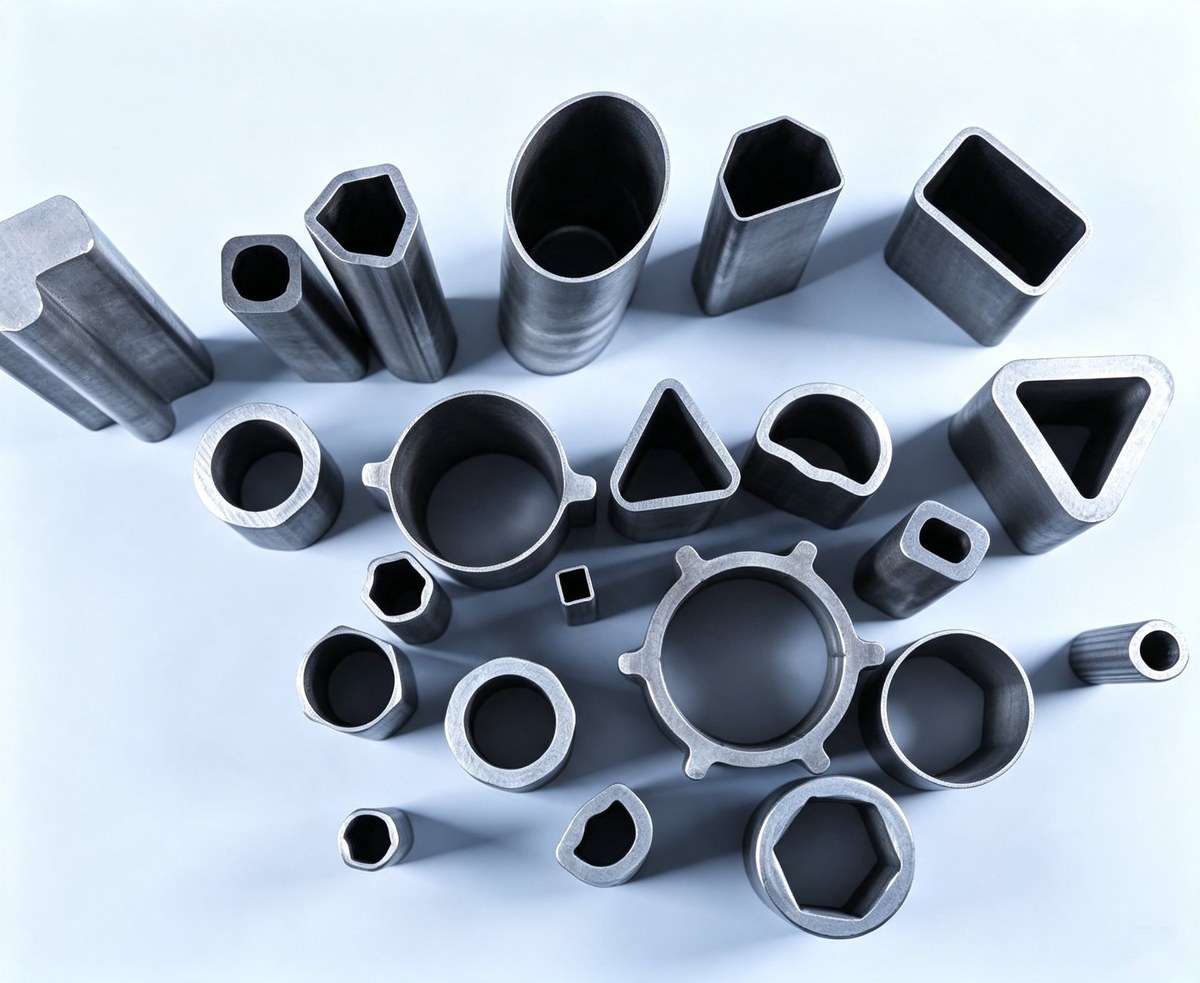
2 By Shape
| Shape | Description | Common Applications |
|---|
| Round (CHS - Circular Hollow Section) | Standard circular cross-section, dimensioned by OD and wall thickness | Columns, trusses, piles, offshore structures |
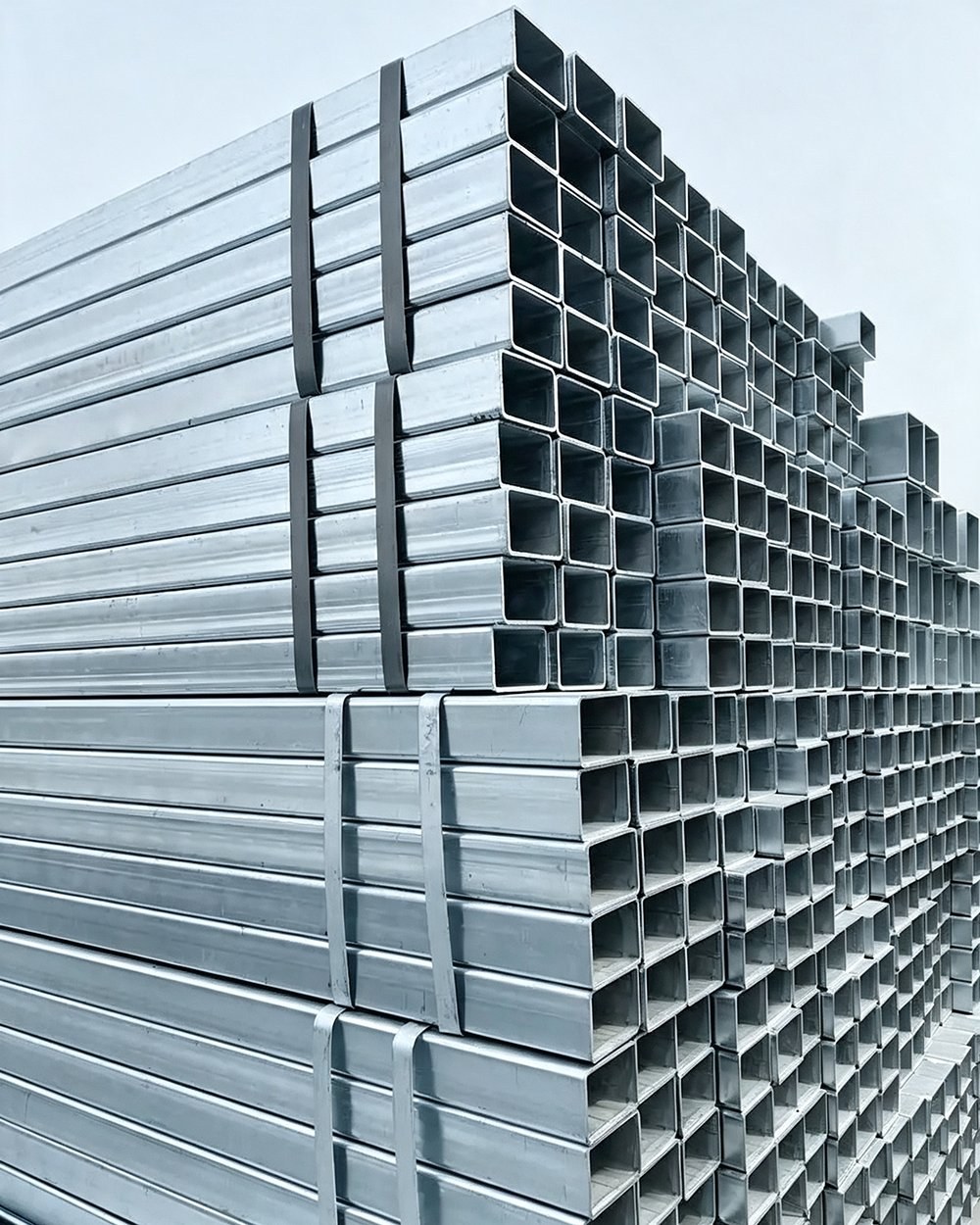
| Square (SHS - Square Hollow Section) | Square cross-section with rounded corners | Columns, frames, architectural exposed structures |
| Rectangular (RHS - Rectangular Hollow Section) | Rectangular cross-section with rounded corners | Beams, frames, building structures, welded frames |
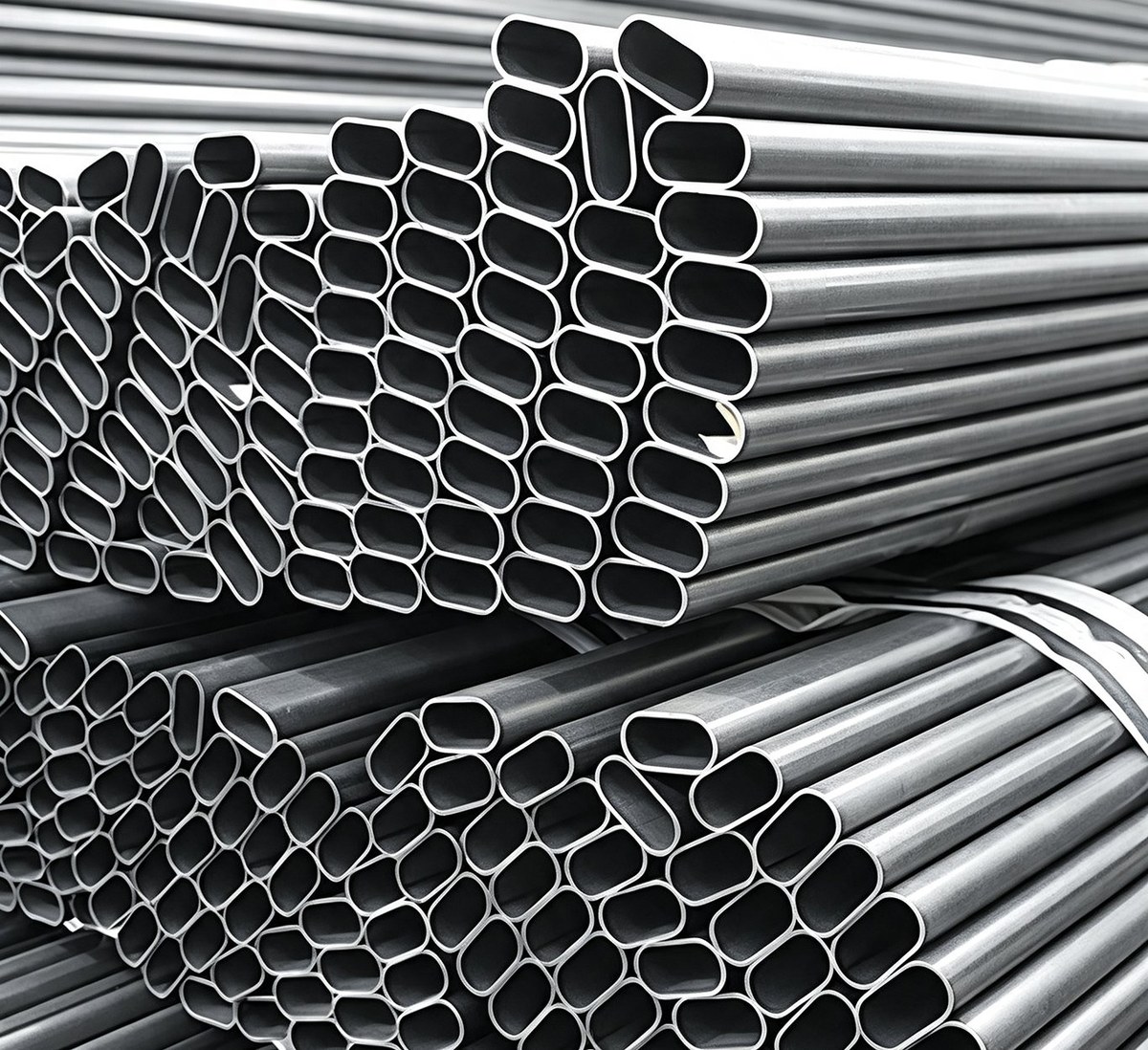
| Elliptical / Oval | Non-circular profile | Architectural features, handrails |
| Custom Shapes | Special profiles as per customer requirements | Specific structural design applications |
Note: HSS corners are heavily rounded, with a radius approximately twice the wall thickness, and wall thickness is uniform around the section .
Applications and End Uses
1 Machinery and Equipment Structures
| Application | Description |
|---|
| Heavy Equipment Frames | Excavator booms, crane structures, loader frames |
| Roll-Over Protective Structures (ROPS) | Safety structures for construction and agricultural equipment |
| Conveyor Systems | Support frames and rollers |
| Hydraulic Support Equipment | Coal mining and construction machinery (GB/T 17396) |
| Military Equipment | Specialized structural components |
2 Shipbuilding and Marine Structures
| Application | Description |
|---|
| Hull Framing | Support structures within vessels |
| Offshore Platforms | Jacket structures, topside support, subsea structures |
| Underwater Platforms | Corrosion-resistant structural applications |
| Piers and Dock Facilities | Foundation support and bracing |
3 Building and Civil Construction
| Application | Description |
|---|
| Building Frameworks | Columns, beams, braces, roof trusses |
| Bridges | Main structural members, support systems |
| Sign Supports and Poles | Highway signage, lighting poles |
| Cranes and Towers | Lifting equipment, transmission towers |
| Fencing and Agricultural Structures | Livestock enclosures, greenhouses, feedlots |
| Playground Equipment | Recreational facilities and sports complexes |
Applicable Standards
1 International Standards
| Standard | Description | Key Grades |
|---|
| ASTM A500 / A500M | Cold-formed welded and seamless carbon steel structural tubing in rounds and shapes | A, B, C, D (Yield: 228–317 MPa) |
| ASTM A501 / A501M | Hot-formed welded and seamless carbon steel structural tubing | A, B |
| ASTM A847 / A847M | Cold-formed welded and seamless high-strength, low-alloy structural tubing with improved atmospheric corrosion resistance (weathering steel) | — |
| ASTM A618 / A618M | Hot-formed welded and seamless high-strength, low-alloy structural tubing | — |
| ASTM A1085 | Cold-formed welded carbon steel hollow structural sections; higher strength and tighter tolerances than A500 | 50 ksi min yield |
| EN 10210-1/2 | Hot-finished structural hollow sections of non-alloy and fine grain structural steels | S235JRH to S460NLH |
| EN 10219-1/2 | Cold-formed welded structural hollow sections of non-alloy and fine grain steels | S235J0H, S355J2H, etc. |
| AS/NZS 1163 | Cold-formed structural steel hollow sections (Australia/New Zealand) | 250, 350, 450 MPa grades |
2 Chinese Standards (GB)
| Standard | Description | Key Grades |
|---|
| GB/T 8162-2018 | Seamless steel tubes for structural purposes — primary Chinese structural pipe standard | 20#, 45#, Q345, 20Cr, 40Cr, 20CrMo, 42CrMo |
| GB/T 17396 | Seamless steel tubes for hydraulic support equipment | 27SiMn, 30MnNbRE, 30CrMnSi |
| GB/T 14975 | Stainless steel seamless tubes for structural applications | Various stainless grades |
3 Japanese Standards (JIS)
| Standard | Description | Key Grades |
|---|
| JIS G3444 | Carbon steel tubes for general structural purposes | — |
| JIS G3466 | Carbon steel square and rectangular tubes for general structure | STK 400, STK 490 |
4 Design Codes
- Structural pipe is designed and specified in accordance with:
- AISC 360 (US) / EN 1993 (Eurocode 3)
- AS 4100 (Australia)
- Corresponding Chinese structural design codes
Steel Grades and Materials
1 Carbon Steel Grades
| Grade | Equivalent | Yield Strength (MPa) | Applications |
|---|
| 10# | — | ≥205 | Light structural applications |
| 20# | ASTM A53/A106 Gr.B equivalent | ≥245 | General structural and mechanical parts |
| 35# | — | — | Medium-strength components |
| 45# | C45E | — | High-strength structural components |
2 Low-Alloy / High-Strength Grades
| Grade | Standard | Yield Strength (MPa) | Applications |
|---|
| Q345A/B/C/D | GB/T 8162 | ~345 | General structural applications |
| Q390 | GB/T 8162 | ~390 | Higher strength requirements |
| Q420 | GB/T 8162 | ~420 | High-strength structural components |
| 25Mn | — | — | Heavy-duty structural applications |
| 27SiMn | GB/T 17396 | ≥835 | Hydraulic support equipment |
| ASTM A500 Gr. B | ASTM A500 | 317 | Most common HSS grade in North America |
| ASTM A500 Gr. C | ASTM A500 | 345 | Higher strength HSS |
| ASTM A1085 | ASTM A1085 | 345 | Improved tolerances over A500 |
3 High-Strength Quenched & Tempered Grades
| Grade | Standard | Yield Strength (MPa) | Applications |
|---|
| S770QL | Technical agreement / EN equivalent | 770–860 | High-strength crane and structural components |
| S890QL | Technical agreement / EN equivalent | 890–950 | Ultra-high strength structural applications |
Note: S770QL and S890QL exhibit excellent toughness at –40°C (Charpy impact >100J and >60J respectively) and are used in applications requiring high strength-to-weight ratios, such as crane booms, bridges, offshore platforms, and heavy equipment frames .
4 Additional Materials
| Material Type | Standards | Applications |
|---|
| Stainless Steel | GB/T 14975, ASTM A554 | Corrosion-resistant structural components |
| Weathering Steel (A847) | ASTM A847 | Improved atmospheric corrosion resistance; exposed structures |
| Alloy Steels (20Cr, 40Cr) | GB/T 8162 | High-strength machined structural components |
Dimensions and Sizes
1 Round Structural Pipe
| Size Category | OD (mm) | OD (inches) | Wall Thickness (mm) |
|---|
| Small | 42 – 89 | 1 1/2 – 3 1/2 | 4 – 12 |
| Medium | 114 – 219 | 4 1/2 – 8 5/8 | 4 – 25 |
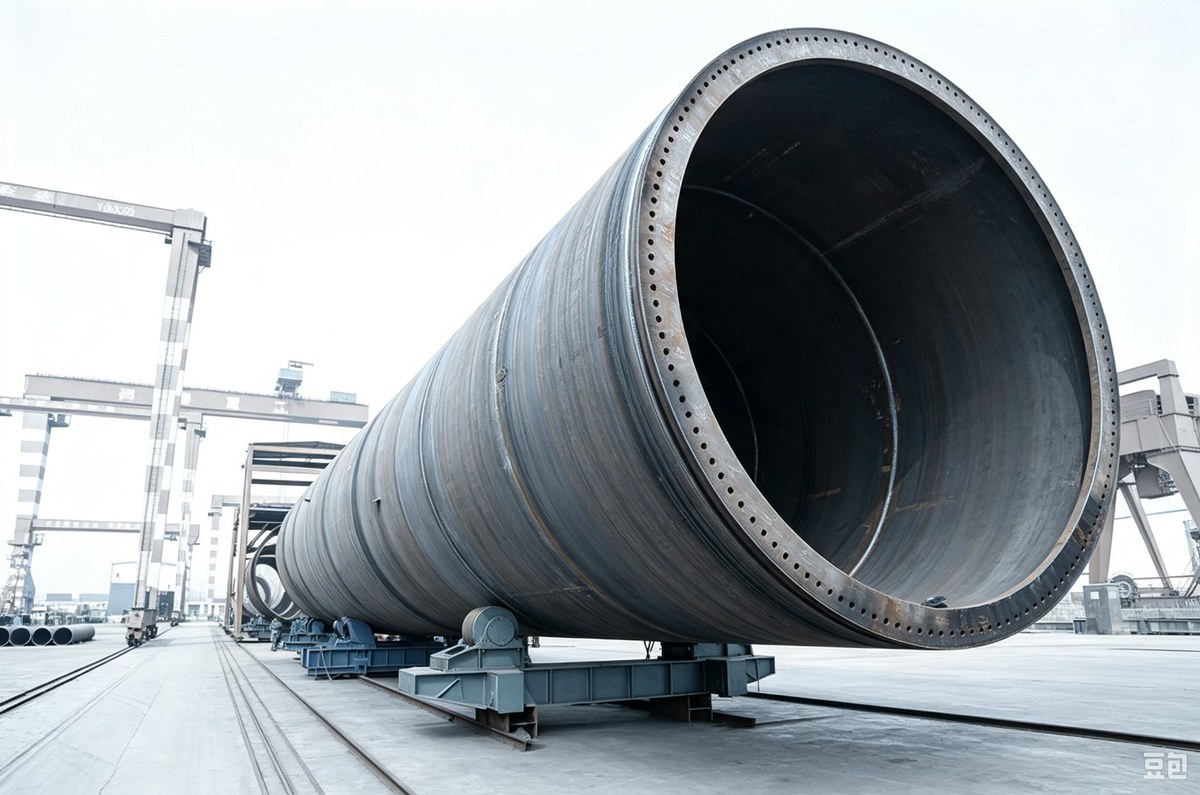
| Large | 273 – 508 | 10 3/4 – 20 | 6 – 60 |
| Extra Large | 610 – 760 | 24 – 30 | 8 – 120 |
Common Range: OD 32–630 mm for hot-rolled seamless; OD 5–200 mm for cold-drawn . Production range typically up to OD 760 mm with wall thickness up to 120 mm .
2 Square and Rectangular HSS
| Shape | Size Range (mm) | Wall Thickness (mm) |
|---|
| Square (SHS) | 20×20 – 600×600 | 2.0 – 25.0 |
| Rectangular (RHS) | 50×25 – 700×300 | 2.0 – 25.0 |
Note: HSS dimensions are based on exterior dimensions of the profile, unlike process pipe which is specified by NPS (Nominal Pipe Size) and schedule .
3 Lengths
| Length Type | Range |
|---|
| Fixed Length | 5.8 m, 6.0 m, 11.8 m, 12.0 m |
| Single Random Length (SRL) | 5.0 – 7.0 m |
| Double Random Length (DRL) | 10.0 – 14.0 m |
| Extended Lengths | Up to 18 m (available on special order) |
Heat Treatment and Delivery Conditions
- Structural pipe can be supplied in various conditions to achieve required mechanical properties :
1 Hot-Finished (As-Rolled)
| Description | Characteristics |
|---|
| Hot-Rolled / Hot-Finished | No heat treatment after forming; cooling from final rolling temperature (800–960°C) in air |
| Features | Cost-effective; suitable for general structural applications; property uniformity less than normalized condition |
2 Normalized (+N)
| Description | Characteristics |
|---|
| Normalized | Heated above transformation temperature and air-cooled; "bright" (no oxide layer) |
| Features | Refined grain structure; uniform properties; optimal strength-ductility balance; common for structural grades |
3 Quenched & Tempered (Q&T)
| Description | Characteristics |
|---|
| Quenched & Tempered | Heated, rapidly cooled (air or water), then tempered to achieve final mechanical properties |
| Features | Highest strength combinations with good toughness; required for high-strength grades like S770QL, S890QL |
Quenching Equipment: Full-length heat treatment with spray quenching from both inner and outer surfaces ensures through-wall uniformity and better hardenability, especially for thick-wall pipe .
4 Annealed (+A)
| Description | Characteristics |
|---|
| Annealed | Heated and slowly cooled to achieve maximum ductility and relieve internal stresses |
| Features | Maximum ductility; used for applications requiring extensive forming or machining |
5 Cold-Drawn (Cold-Finished)
| Description | Characteristics |
|---|
| Cold-Drawn / Cold-Finished | Cold-worked to achieve tighter dimensional tolerances and improved surface finish; may be stress-relieved |
| Features | Higher dimensional accuracy; superior surface quality; higher mechanical properties but greater internal stresses |
6 Stress-Relieved (+SR)
| Description | Characteristics |
|---|
| Stress-Relieved | Cold-worked product heated to relieve residual stresses without altering microstructure significantly |
| Features | Dimensional stability; reduced residual stress; preferred for components requiring stability after welding or machining |
End Finishes and Surface Treatments
1 End Finishes
| Finish Type | Description |
|---|
| Square Ends / Plain Ends | Straight cut, saw cut, or torch cut; standard for welded connections |
| Beveled Ends | Prepared for welding with appropriate bevel angle |
| Threaded Ends | For threaded connections in lower-stress applications |
2 Surface Treatments
| Treatment | Description |
|---|
| Bare / Plain | Standard as-rolled or as-formed finish |
| Lightly Oiled | Temporary corrosion protection during storage and transport |
| Painting | Black, red, yellow, or custom colors for identification and corrosion protection |
| Galvanized | Zinc coating for enhanced corrosion resistance |
| Anti-Corrosive Coating | Specialized coatings for aggressive environments |
Structural vs. Process Pipe: Key Distinctions
| Feature | Structural Pipe | Process Pipe |
|---|
| Primary Function | Load bearing (compression, tension, bending) | Fluid/gas containment under pressure |
| Key Standards | ASTM A500, A501, EN 10210, EN 10219 | ASTM A106, A53, API 5L |
| Design Code | AISC 360, Eurocode 3 | ASME B31.3, B31.1, B31.4, B31.8 |
| Shape | Round, square, rectangular (HSS) | Round only |
| Sizing | OD × wall thickness (exterior dimensions) | NPS and schedule |
| Hydrostatic Testing | Not required | Mandatory |
| NDT | Minimal or none | UT, RT on welds; full-body UT as required |
| Traceability | Lot-based | Heat-based (individual heat tracking) |
| Relative Cost | Lower | Higher |