Mechanical Pipe
Product Overview
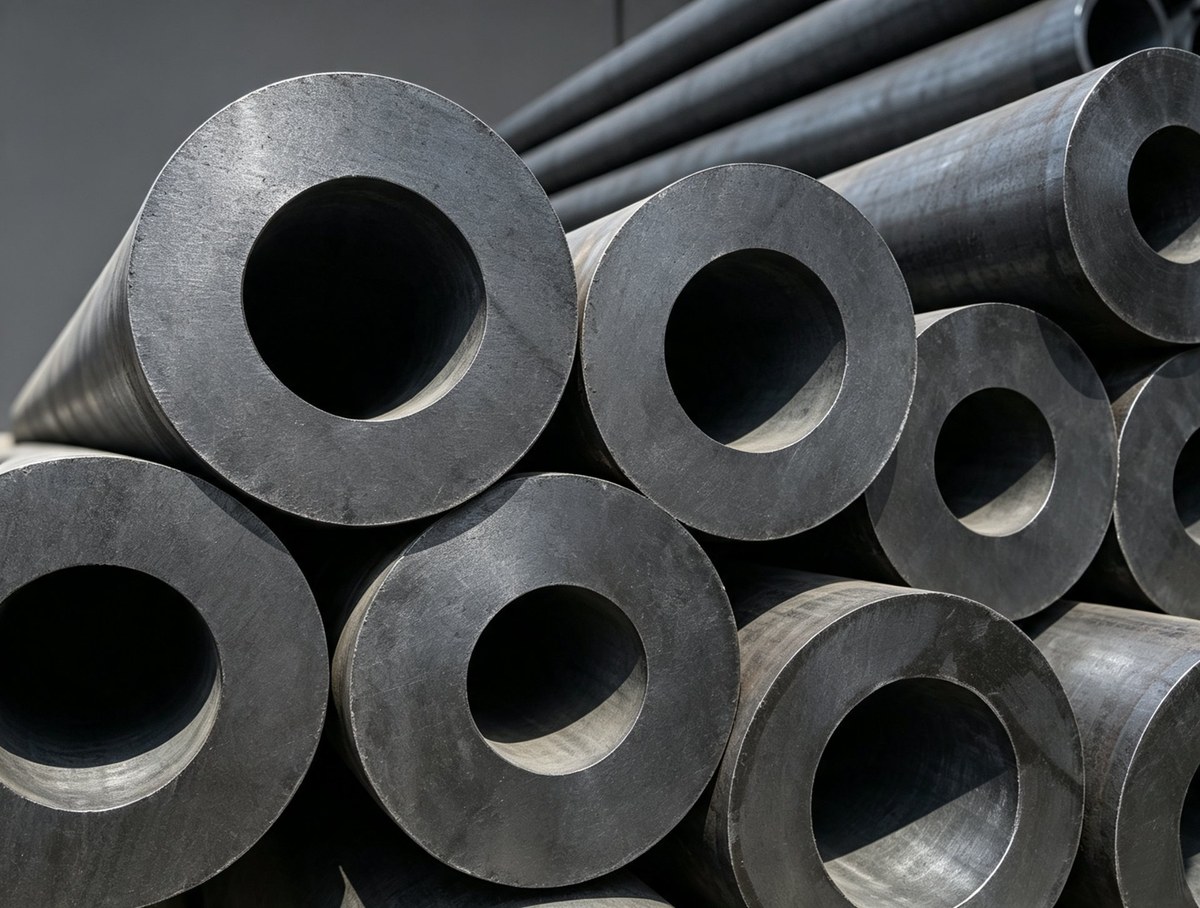
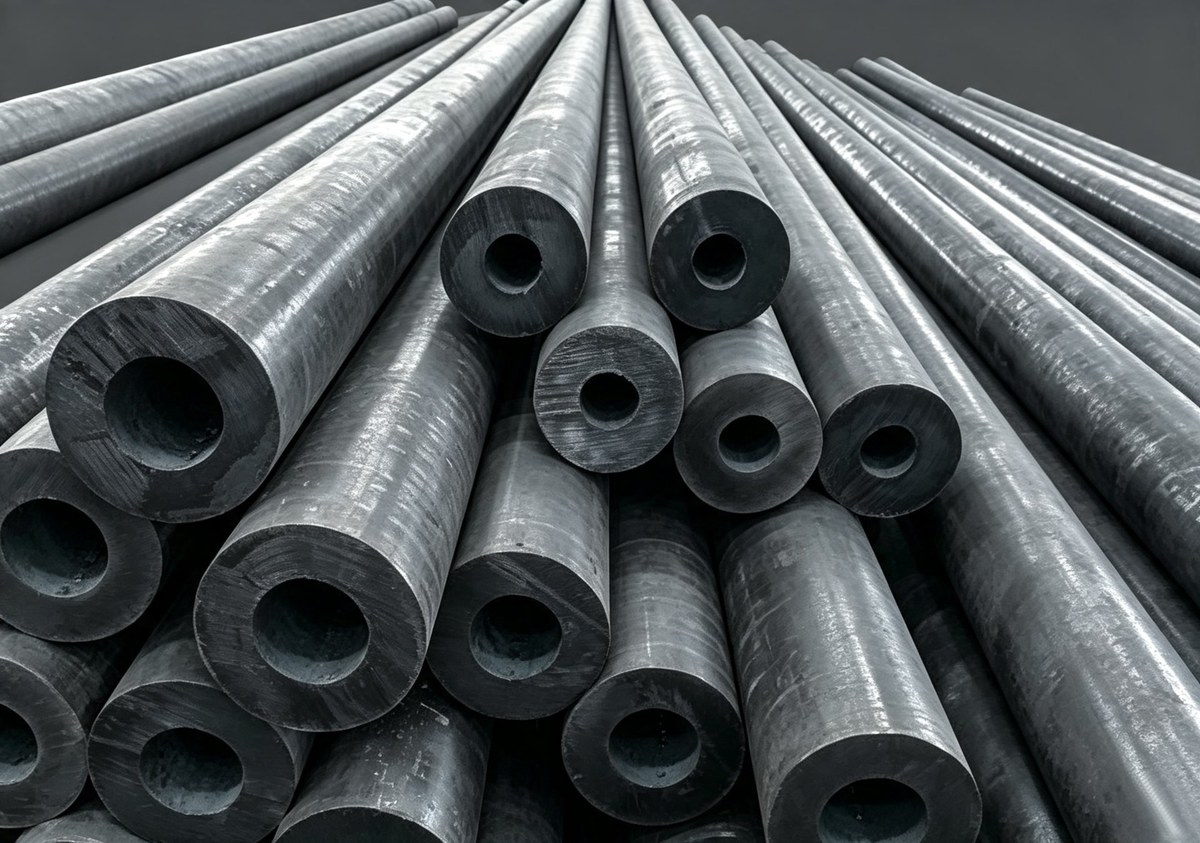
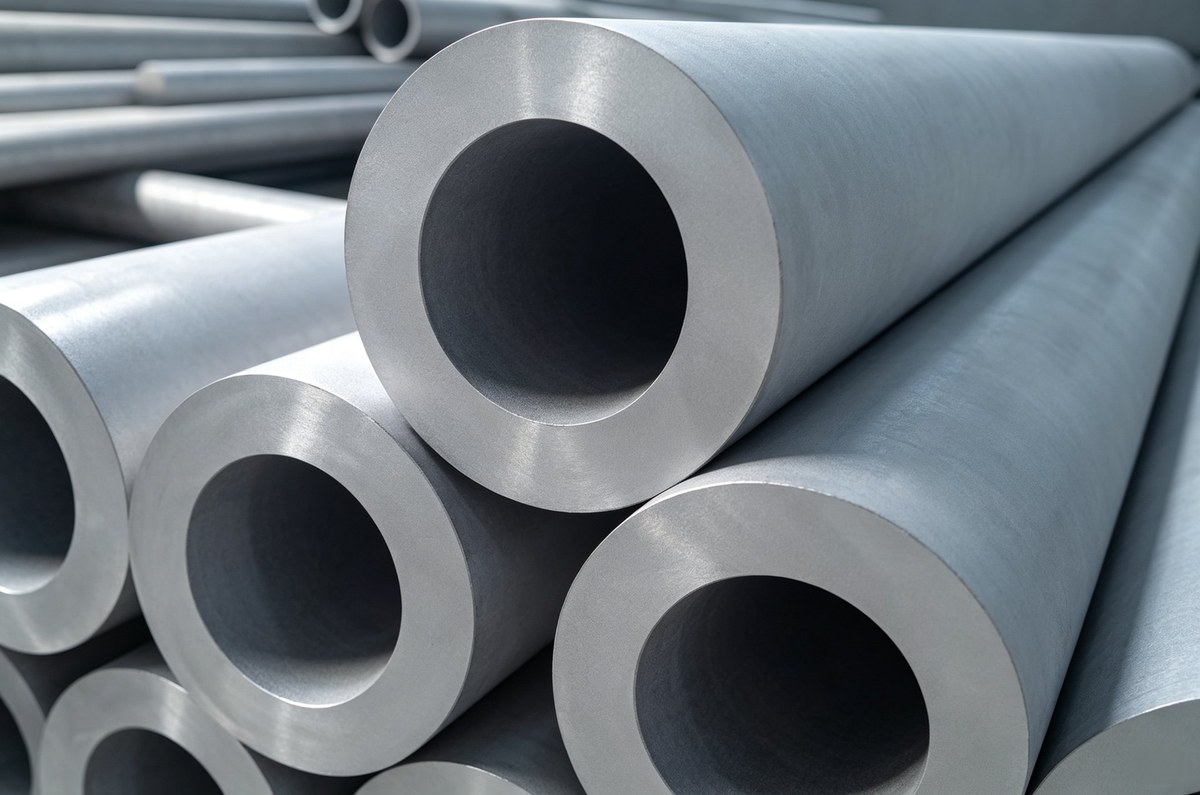
Mechanical pipe (also known as mechanical tubing) refers to high-performance tubular products specifically engineered for machinery manufacturing, transmission systems, and precision structural applications. Unlike line pipe or OCTG products which are primarily designed for fluid conveyance and downhole service, mechanical pipe emphasizes dimensional accuracy, mechanical strength, and machinability as its core performance attributes.
Mechanical pipe is manufactured to meet specific end-use requirements rather than standardized pressure-containing specifications. While mechanical pipes can be produced to standard specifications upon request, they are usually produced to "typical" properties which focus on yield strength for a specific size and wall thickness. In some severely formed applications, the yield strength may not even be specified, and mechanical tubes are produced to be "fit for service".
The distinction between mechanical pipe and standard pipe lies in its purpose: mechanical pipe is used as a raw material for subsequent machining into finished components, whereas standard pipe is typically used for fluid or gas conveyance in its delivered form.
Product Types
1 Oil Service Machined Pipe (Oilfield Machinery Pipe)
Oil service machined pipe is the most demanding category within mechanical pipe, serving as essential material for petroleum exploration equipment, drilling equipment, mechanical oil recovery equipment, and oil & gas gathering systems. This product type features superior strength-toughness matching, uniform through-wall properties, and excellent machinability.
- Primary Applications:
- Drilling and completion tool components
- Downhole power drilling tools
- Packer and suspension systems
- Wellhead system devices
- Subsea drilling equipment components
2 Construction Machinery Pipe
Mechanical pipe specifically designed for heavy equipment manufacturing, structural frameworks, and hydraulic systems in construction and material handling applications.
- Typical Applications:
- Hydraulic cylinder tubes
- Structural components for excavators, cranes, and loaders
- Bearing tubes and drive shaft tubes
- Pneumatic component tubes
3 Equipment Components / Structural Pipe
Mechanical pipe used as raw material for machining precision components across various industries. These products are supplied with controlled dimensional tolerances and consistent mechanical properties to facilitate subsequent machining operations.
- Typical Applications:
- General machinery manufacturing
- Automotive components
- Transmission systems
- Bushes, bearings, cylinders, and shafts
4 Precision Mechanical Tube
Cold-drawn or cold-rolled mechanical tubes with enhanced dimensional accuracy, surface quality, and roundness characteristics. These products are specifically designed to minimize machining time and improve material utilization.
Steel Grades
1 Carbon Steel Grades
| Grade | Standard Equivalent | Typical Application |
|---|
| 20# | AISI 1020 | General engineering use; mother tube for cold-drawn low-pressure hydraulic cylinders |
| 45# | AISI 1045 | General engineering use; higher strength carbon steel |
| 25Mn | AISI 1026 | Construction machinery; mother tube for high-pressure hydraulic cylinders |
| ANSI 1026 | ASTM A519 1026 | High-pressure hydraulic applications; hot-rolled ultimate strength 90 ksi (621 MPa) |
2 Low-Alloy Steel Grades
| Grade | Standard Equivalent | Yield Strength Range | Application |
|---|
| 16Mn / Q345B | ASTM A572 Gr.50 | ~355 MPa (51.5 ksi) | General structural and mechanical applications |
| 35CrMo | AISI 4135 | Medium strength | High-strength machined products; corrosion-resistant tools |
| 42CrMo | AISI 4142 | Medium-high strength | High-strength machined products |
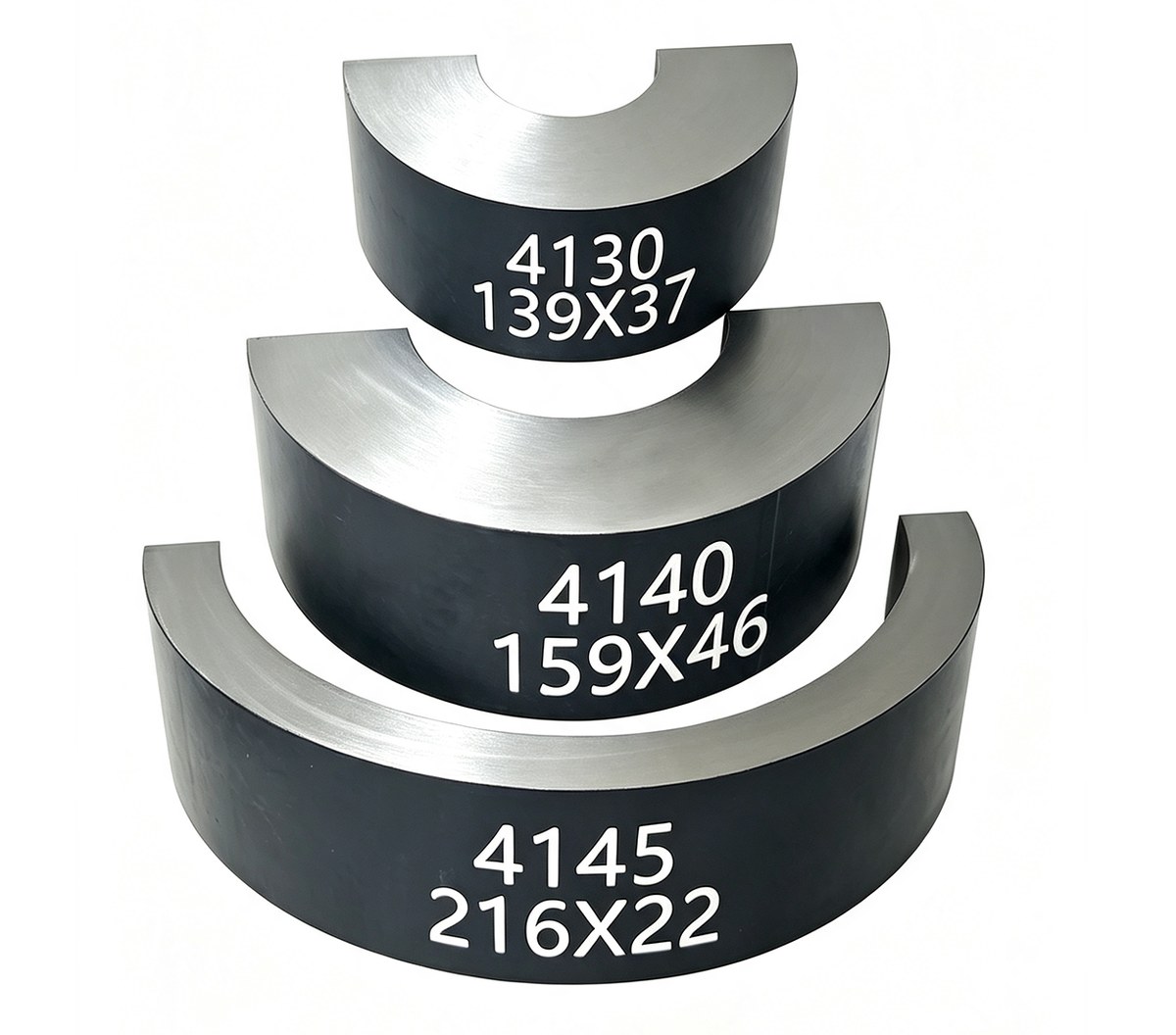
| ANSI 4130 | ASTM A519 4130 | 55–95 ksi+ | Oil service components; hot-rolled yield 70 ksi (483 MPa); stress-relieved yield 85 ksi (586 MPa) |
| ANSI 4140 | ASTM A519 4140 | 80–135 ksi+ | High-strength oil service applications; hot-rolled yield 60 ksi (414 MPa); stress-relieved yield 100 ksi (689 MPa) |
3 Oil Service Proprietary Grades (Yield Strength: 80–150 ksi)
| Grade | Yield Strength (ksi) | Description |
|---|
| 55ksi | 55 | Standard alloy steel for moderate-strength oilfield components |
| 80ksi | 80 | API/Alloy grade for oil service machined parts |
| 95ksi | 95 | High-strength alloy steel for drilling tools |
| 110ksi | 110 | Ultra-high strength grade for demanding applications |
| 125ksi | 125 | Premium high-strength oil service grade |
| 135ksi | 135 | Maximum-strength alloy steel for extreme service |
4 API-Grade Equivalent Materials for Oil Service
| Grade | Standard | Application |
|---|
| 4130M/T95 | API 5CT / Proprietary | Oil service components requiring T95 equivalent properties |
| Q125 | API 5CT | Ultra-high strength components |
| T95-1 | API 5CT | Sour service compatible high-strength components |
| L80-1 | API 5CT | Moderate-strength components with sour service capability |
| C110 | API 5CT | High-strength components with corrosion resistance |
5 Other Material Types
| Material Type | Description | Applications |
|---|
| Stainless Steel | Austenitic grades (304, 316) | Corrosion-resistant mechanical components |
| ANSI 4340 | Nickel-chromium-molybdenum alloy | High-strength, high-toughness components requiring fatigue resistance |
| Nb-based Alloys (Niobium) | Specialty alloys | High-temperature and high-strength specialized applications |
Yield Strength Range Summary: 80–150 ksi (552–1,034 MPa) covering 80ksi, 95ksi, 110ksi, 125ksi, and 135ksi grades, with API-equivalent grades through Q125 (125 ksi).
Full Range of Specifications
1 Outside Diameter (OD) Range
| Size Category | OD (mm) | OD (inches) | Typical Applications |
|---|
| Small Diameter | 10.0 – 60.3 | 1/4 – 2 3/8 | Precision components, hydraulic lines |
| Medium Diameter | 63.5 – 168.3 | 2 1/2 – 6 5/8 | General machinery components |
| Large Diameter | 177.8 – 406.4 | 7 – 16 | Heavy construction equipment, oilfield components |
| Extra Large | 406.4 – 508.0 | 16 – 20 | Large structural applications |
| Maximum | Up to 762.0 | Up to 30 | Special-order large diameter requirements |
Primary Supply Range: 80 mm (3") to 508 mm (20") OD, with seamless thick/mid-wall construction.
2 Wall Thickness Range
| Category | Thickness Range | Notes |
|---|
| Standard | 6 – 35 mm | Common commercial range |
| Thick-Wall (Mid-Wall) | 10 – 50 mm | Primary range for mechanical pipe applications |
| Heavy-Wall | 50 – 100 mm | Maximum thickness available on special order |
Primary Supply Range: 10 – 100 mm wall thickness, emphasizing seamless thick/mid-wall configurations.
3 Lengths
| Length Type | Range | Application |
|---|
| Single Random Length (SRL) | 5.0 – 7.0 m | General applications |
| Double Random Length (DRL) | 10.0 – 14.0 m | Standard construction and machining |
| Fixed Length | 5.8 m, 6.0 m, 11.8 m, 12.0 m | Standard production |
| Extended Length | Up to 14.0 m | Standard maximum |
Applicable Standards
1 American Standards (ASTM)
| Standard | Description |
|---|
| ASTM A519 | Primary standard – Seamless carbon and alloy steel mechanical tubing |
| ASTM A53 | General structural and mechanical pipe |
| ASTM A106 | High-temperature service pipe |
| ASTM A500 | Cold-formed welded and seamless carbon steel structural tubing |
| ASTM A513 | Electric-resistance-welded carbon and alloy steel mechanical tubing |
| ASTM A252 | Welded and seamless steel pipe piles |
| API 5CT | Casing and tubing – referenced for oil service components |
| NACE MR0175 | H₂S-containing environments – materials requirements |
2 European Standards (EN)
| Standard | Description |
|---|
| EN 10297-1 | Seamless circular steel tubes for mechanical and general engineering purposes |
| EN 10210-1/2 | Hot-finished structural hollow sections |
| EN 10294-1 | Hollow bars for machining |
| EN 10305-1 | Precision steel tubes for mechanical applications |
| DIN 2391 | Precision steel tubes – German standard |
3 Chinese Standards (GB)
| Standard | Description |
|---|
| GB/T 8162 | Seamless steel tubes for structural purposes |
| GB/T 8163 | Seamless steel tubes for liquid service – referenced for oil service pipe |
4 Japanese Standards (JIS)
| Standard | Description |
|---|
| JIS G3441 | Machinery structural carbon steel tubes |
| JIS G3445 | Carbon steel tubes for machine structural purposes |
5 Customer-Specific Standards (Oil Service)
| Customer / Standard | Description |
|---|
| ES-MA-18 (Halliburton) | Low-alloy material high-performance seamless steel tube technical specification, incorporating API 5CT standards and specifically designed for extreme oil/gas and deep-sea drilling conditions |
| Baker Hughes | Proprietary specifications for oil service components |
| SLB (Schlumberger) | Proprietary specifications for oilfield equipment |
| Weatherford | Proprietary specifications for drilling and completion tools |
Heat Treatment Conditions
Mechanical pipe can be supplied in various heat treatment conditions to achieve the required mechanical properties:
| Heat Treatment | Description | Typical Applications |
|---|
| Normalized (N) | Heated above transformation temperature and air-cooled; refines grain structure; provides uniform properties | Carbon steel and low-alloy grades for general mechanical service |
| Air Quenched (Quenched & Tempered / Q&T) | Heated to austenitizing temperature, cooled by forced air, then tempered | Medium-alloy steels requiring high strength with good toughness |
| Water Quenched (Q&T) | Heated to austenitizing temperature, rapidly cooled in water, then tempered | Highest-strength grades; produces maximum hardness and strength |
| As-Hot Finished (HFS) | Supplied in as-rolled condition without additional heat treatment | Cost-effective, lower strength requirements |
| Cold-Drawn (CDS) | Cold-worked to improve dimensional accuracy and surface finish; may be stress-relieved | Precision mechanical tubing with tight tolerances |
| Stress-Relieved (SR) | Cold-worked tubing heated to relieve residual stresses | Components requiring dimensional stability after machining |
Machinability and Quality Characteristics
- Mechanical pipe distinguishes itself from standard pipe through specific quality attributes:
| Attribute | Description |
|---|
| Dimensional Accuracy | Tight tolerances on OD, ID, and wall thickness to minimize machining |
| Roundness | Superior bore roundness, particularly critical for thick-wall pipe (>20 mm) |
| Surface Finish | High surface smoothness; available bare, oiled, or coated |
| Uniformity | Consistent mechanical properties throughout; superior strength-toughness matching for oil service grades |
| Machinability | Optimized microstructure for efficient machining operations |
| Through-Wall Property Uniformity | Uniform hardness and strength from ID to OD |