Round, square, hexagonal, and flat bars in carbon, alloy, stainless, and tool steels.
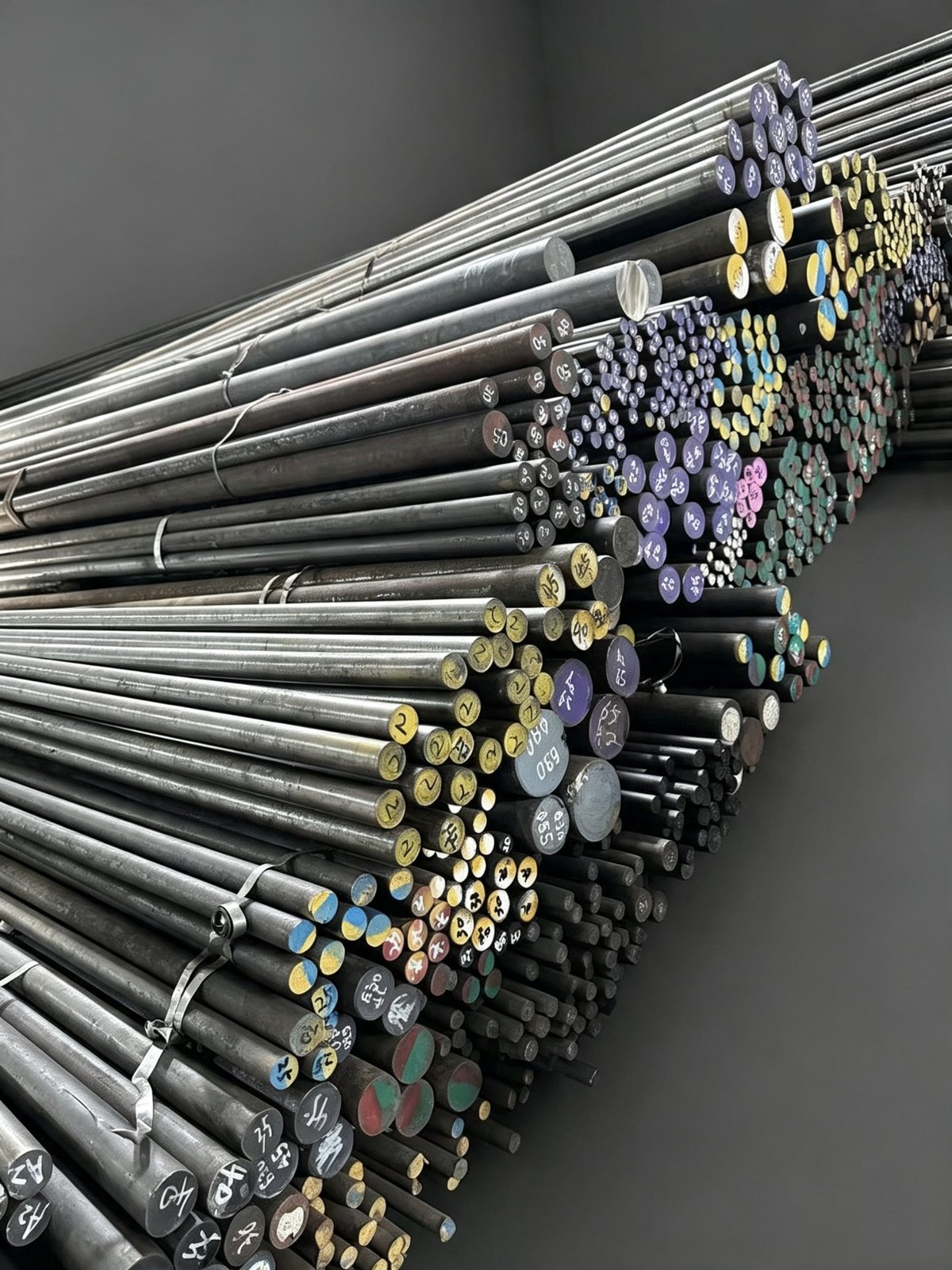
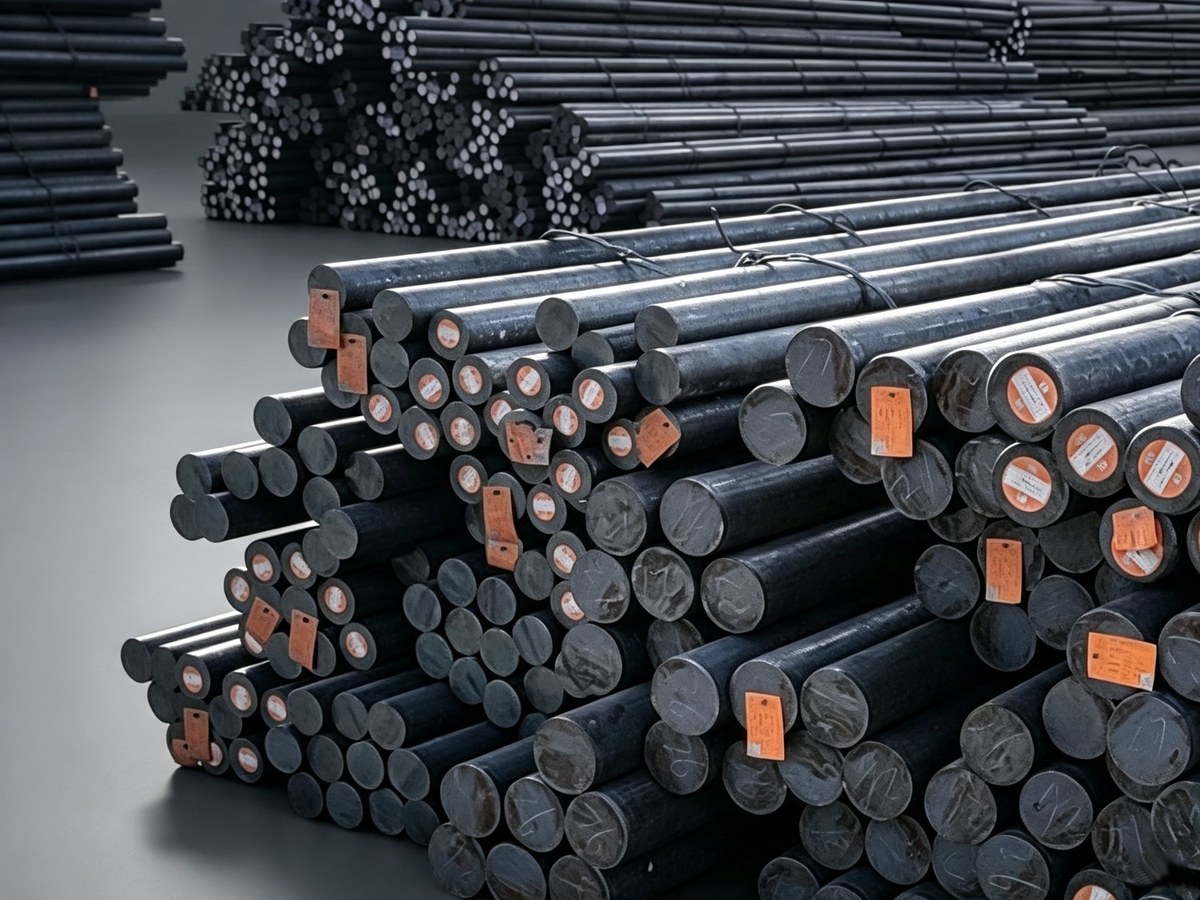
Steel bars are long, solid-section steel products manufactured by hot rolling, cold drawing, or forging processes. Bar products serve as essential semi-finished materials for downstream machining, forging, and manufacturing industries, forming the backbone of mechanical components, automotive parts, construction equipment, and industrial tools.
Bar products are categorized by cross-sectional shape, manufacturing process, heat treatment condition, and material composition. They are fundamental to the machinery industry, with applications spanning from high-strength automotive transmission components to precision instrument parts.
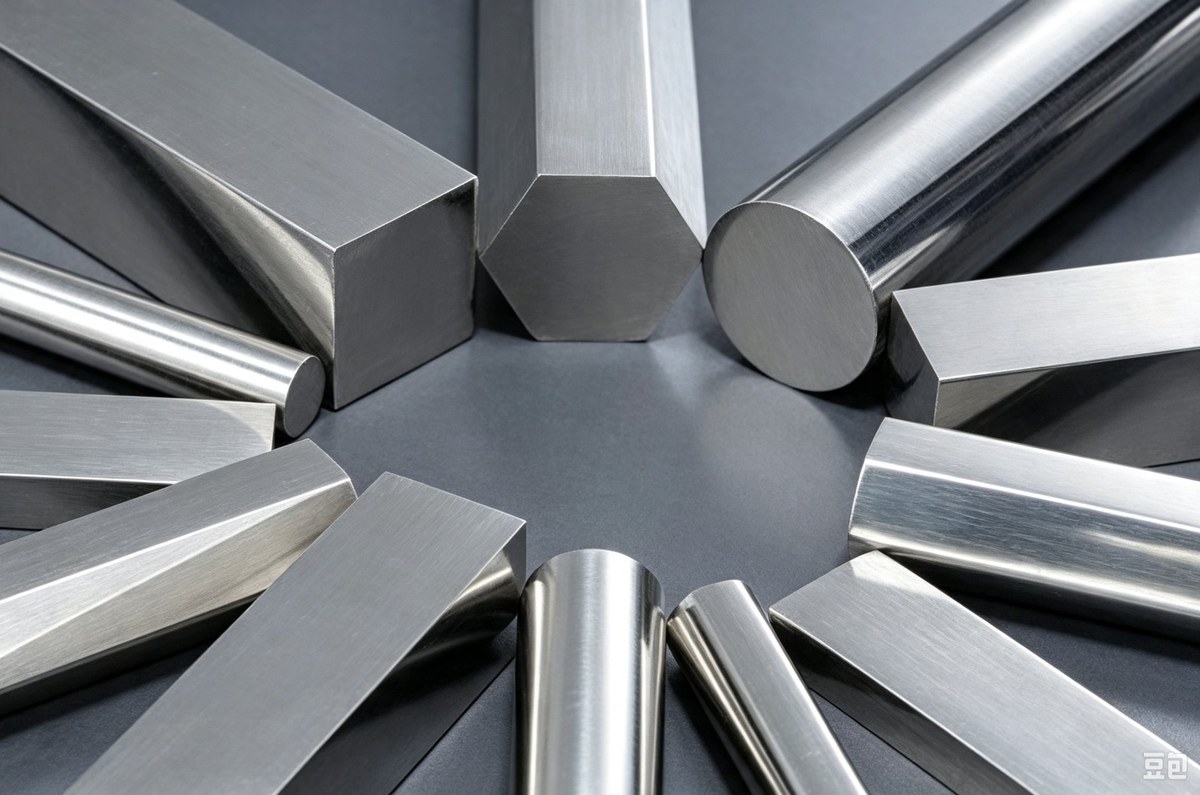
The most common bar shape, characterized by a circular cross-section. Round bars are widely used as raw material for machining shafts, bolts, gears, and other cylindrical components.
Bars with a square cross-section, used for structural applications, forging blanks, and components requiring flat faces for clamping or mounting.
Six-sided bars used primarily for fasteners, fittings, and machined components where wrench engagement is required. Hexagonal bars reduce machining time for hex-head bolts and nuts.
Rectangular cross-section bars used for structural applications, mechanical guides, and various industrial components.
| Shape | Description | Applications |
|---|---|---|
| Octagonal Bars | Eight-sided cross-section | Similar to hexagonal, specialized fastener applications |
| Billets | Large square or rectangular sections for further processing | Forging, re-rolling into finished bars |
| Ingots | Large cast forms for primary working | Forging, extrusion, rolling into smaller sections |
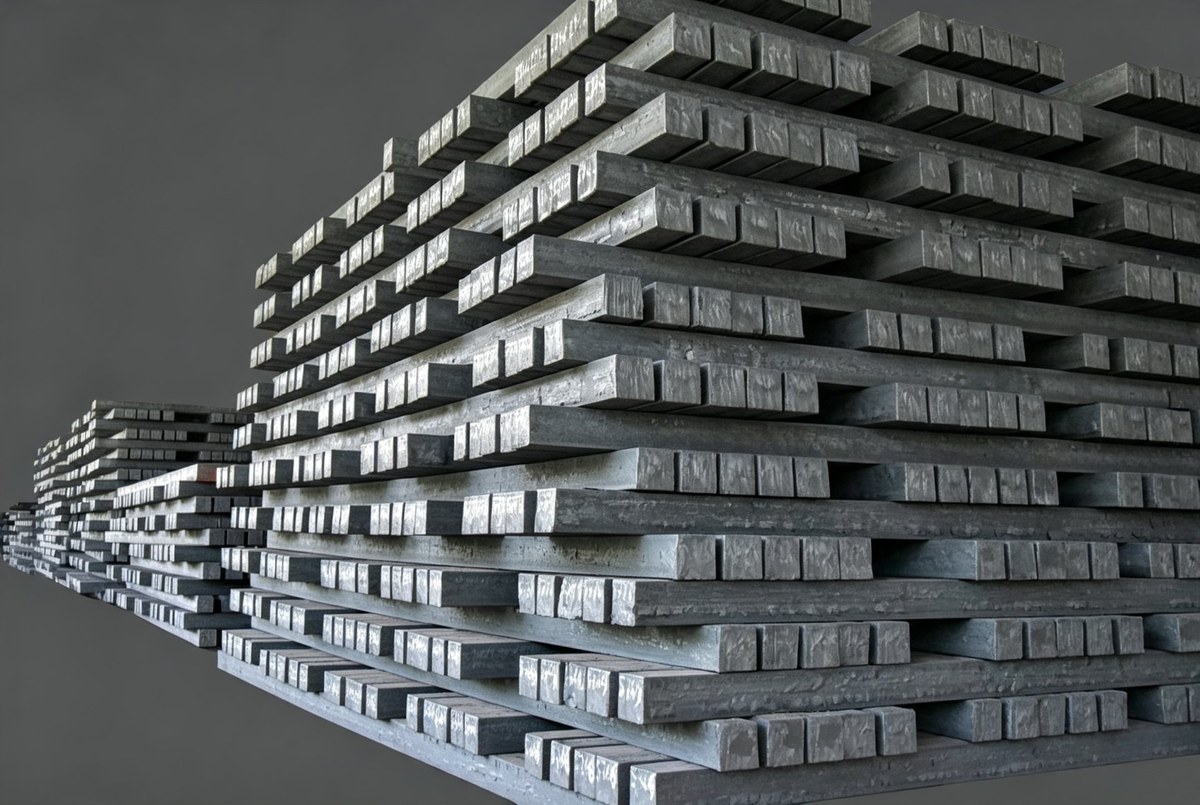
The steelmaking process begins with continuous casting, where molten steel is solidified into semi-finished shapes (billets or blooms) for subsequent rolling or forging. Continuous casting provides superior internal quality, reduced segregation, and improved yield compared to traditional ingot casting.
Quality Considerations: Continuous casting enables tight control of solidification parameters, minimizing centerline segregation, porosity, and internal cracks that can affect bar quality .
Billets are heated above recrystallization temperature (typically 1,050–1,250°C) and passed through a series of rolling stands to achieve the desired cross-section and dimensions. Hot rolling is the primary production method for bar products.
Hot-rolled bars are drawn through dies at room temperature to achieve closer dimensional tolerances, smoother surface finishes, and enhanced mechanical properties. Cold drawing increases yield strength through strain hardening.
Large-diameter bars are produced through open-die or closed-die forging processes when hot rolling cannot achieve the required size or when superior internal quality is required.
Steel bars can be supplied in various heat treatment conditions to achieve specific mechanical properties required for the intended application.
No heat treatment after hot rolling; properties are determined by the rolling process and cooling rate.
Features: Cost-effective, sufficient for general applications where precise mechanical properties are not critical.
Heating above the transformation temperature and air cooling to refine grain structure and achieve uniform mechanical properties.
Applications: Structural components requiring consistent properties, improved machinability.
Heating and slow cooling to achieve maximum softness and ductility. Annealed bars are ideal for extensive cold forming or machining where the material must be easily worked.
Applications: Cold heading, cold forging, deep drawing operations.
Heating, rapid cooling (water or oil quenching), and tempering to achieve high strength with good toughness and ductility.
Applications: High-stress components such as shafts, gears, connecting rods, and fasteners.
Cold-drawn bars heated to relieve residual stresses without significantly reducing strength. This condition provides dimensional stability for precision-machined components.
A specialized annealing process that produces spheroidized carbides, optimizing the steel for cold heading and cold forging operations.
Carbon steels are the most widely used bar materials, with strength and hardness determined primarily by carbon content.
| Grade Series | Standard | Carbon Range | Applications |
|---|---|---|---|
| 08–85 | GB/T 699 | 0.08–0.85% | General machinery, shafts, bolts, forging |
| 15–70Mn | GB/T 699 | 0.15–0.70% | Higher strength components |
| S10C–S58C | JIS G4051 | 0.08–0.58% | Japanese standard equivalents |
| 1006–1095 | SAE/AISI | 0.06–0.95% | US standard equivalents |
| C45 / SAE1045 | EN 10083 / ASTM A29 | 0.45% | Most common medium-carbon steel for general engineering |
Alloy steels incorporate chromium, molybdenum, nickel, vanadium, titanium, and other elements to enhance hardenability, strength, toughness, and heat resistance.
| Grade Series | Standard | Typical Application |
|---|---|---|
| 20–45Mn2 | GB/T 3077 | Medium-strength structural components |
| 20–45Cr | GB/T 3077 | High-strength shafts, gears, fasteners |
| 15–42CrMo | GB/T 3077 | High-strength components, gears, bolts |
| 40CrMnMo | GB/T 3077 | Heavy-duty shafts and gears |
| 42CrMo4 / AISI 4140 | EN 10083 / ASTM A29 | High-strength applications: wind power, oil & gas, automotive |
| 4130 / 4340 | ASTM A29 | Aerospace and high-performance automotive components |
| 34CrNiMo6 | EN 10083 | High-strength, high-toughness components |
| SCM420H / SCM440 | JIS G4053 | Japanese standard equivalents for CrMo steels |
| Grade | UNS | Characteristics | Applications |
|---|---|---|---|
| 304 / 304L | S30400 / S30403 | Excellent formability and corrosion resistance | General corrosion-resistant applications, food equipment |
| 316 / 316L | S31600 / S31603 | Molybdenum addition for enhanced pitting resistance | Marine, chemical, pharmaceutical |
| 321 | S32100 | Titanium stabilized for intergranular corrosion resistance | High-temperature service |
| 316Ti | S31635 | Titanium stabilized variant for improved weldability | Welded fabrications in corrosive environments |
| Grade | UNS | Characteristics | Applications |
|---|---|---|---|
| 410 | S41000 | Good strength, moderate corrosion resistance | Valves, pumps, shafts |
| 420 | S42000 | Higher carbon for increased hardness | Cutlery, surgical instruments |
| 440C | S44004 | High carbon, high hardness | Bearings, valve seats |
| Grade | UNS | Characteristics | Applications |
|---|---|---|---|
| 430 | S43000 | Nickel-free, magnetic, good polishability | Appliance trim, automotive components |
Tool steels are high-carbon, high-alloy steels designed for tooling, dies, and cutting applications.
| Grade Series | Standard | Characteristics | Applications |
|---|---|---|---|
| T7–T13 | GB/T 1298 | Carbon tool steels | Hand tools, woodworking |
| 9SiCr, 8MnSi | GB/T 1299 | Alloy tool steels | Cutting tools, dies |
| 5CrMnMo, 5CrNiMo | GB/T 1299 | Hot-work tool steels | Hot forging dies, die casting |
| H13 / 4Cr5MoSiV1 | ASTM A681 / GB/T 1299 | Hot-work die steel | Hot extrusion, die casting molds |
Bearing steels require exceptionally low oxygen content and minimal non-metallic inclusions to achieve high fatigue life .
| Grade | Standard | Oxygen Target | Applications |
|---|---|---|---|
| GCr15 / SAE52100 / 100Cr6 / SUJ2 | GB/T 18254 / ASTM A295 / EN 10084 / JIS G4805 | ≤ 5 ppm | High-performance bearings in automotive, machinery, wind turbines |
| Grade Series | Standard | Characteristics | Applications |
|---|---|---|---|
| 20CrMnTiH | GB/T 5216 | Case-hardenable gear steel with good core toughness | Automotive transmissions, heavy machinery |
| 16MnCr5H / 20MnCr5H | EN 10084 | European gear steel standards | Gears, shafts, power transmission |
| SAE8620H | ASTM A304 | Nickel-chromium-molybdenum gear steel | Automotive and industrial gearing |
Non-quenched and tempered steels achieve the properties of quenched and tempered steels through controlled rolling and cooling, eliminating the need for heat treatment.
| Grade | Standard | Applications |
|---|---|---|
| C38+N2 / 38MnVS6 | Technical agreement | Connecting rods, crankshafts, high-strength fasteners |
| 49MnVS3 | Technical agreement | Automotive transmission components |
| D38MSV5S | Technical agreement | High-strength structural components |
Nickel-based alloy bars provide exceptional corrosion resistance and high-temperature properties for demanding applications.
| Grade | UNS | Standard | Applications |
|---|---|---|---|
| Incoloy 800 / 800H / 800HT | N08800 / N08810 / N08811 | ASTM B408 | Heat exchangers, petrochemical, high-temperature service |
| Inconel 718 | N07718 | ASTM/EN | Aerospace, gas turbines, high-strength components |
| Condition | Description | Typical Applications |
|---|---|---|
| Black / As-Rolled | Mill scale remains on surface; standard hot-rolled condition | General applications where surface appearance is not critical |
| Bright / Peeled / Turned | Surface layer removed by lathe turning or peeling; smooth, bright finish | High-quality components requiring accurate surface finish |
| Ground | Precision grinding for tight diameter tolerances and superior surface quality | Bearings, precision shafts, high-spec components |
| Polished | Abrasive polishing for mirror-like or satin finish | Decorative, precision instrument applications |
| Drawn (Cold-Finished) | Smooth surface produced by cold drawing; bright finish | Machining stock requiring tight tolerances |
| Tolerance Grade | Description |
|---|---|
| h9 – h11 | Standard tolerances for hot-rolled bars |
| H8 – H11 | Precision tolerances for cold-drawn bars |
| K9 – K13 | Special tolerances for specific applications |
| Standard | Description |
|---|---|
| GB/T 699 | Quality carbon structural steels |
| GB/T 3077 | Alloy structural steels |
| GB/T 5216 | Steels for carburizing gears |
| GB/T 18254 | High-carbon chromium bearing steel |
| GB/T 1222 | Spring steels |
| GB/T 1298 | Carbon tool steels |
| GB/T 1299 | Alloy tool steels |
| GB/T 8731 | Free-cutting structural steels |
| GB/T 15712 | Non-quenched and tempered structural steels |
| Standard | Region | Description |
|---|---|---|
| EN 10083 | Europe | Steels for quenching and tempering |
| EN 10084 | Europe | Case-hardening steels |
| EN 10025 | Europe | Structural steels |
| ASTM A29 | USA | Steel bars, carbon and alloy, hot-wrought |
| ASTM A295 | USA | High-carbon bearing steel |
| ASTM A304 | USA | Alloy steel bars for carburizing applications |
| JIS G4051 | Japan | Carbon steels for machine structural use |
| JIS G4053 | Japan | Alloy steels for machine structural use |
| JIS G4805 | Japan | High-carbon chromium bearing steels |
| SAE/AISI Standards | USA | Various carbon and alloy steel specifications |