Heavy Wall Plate
Product Overview
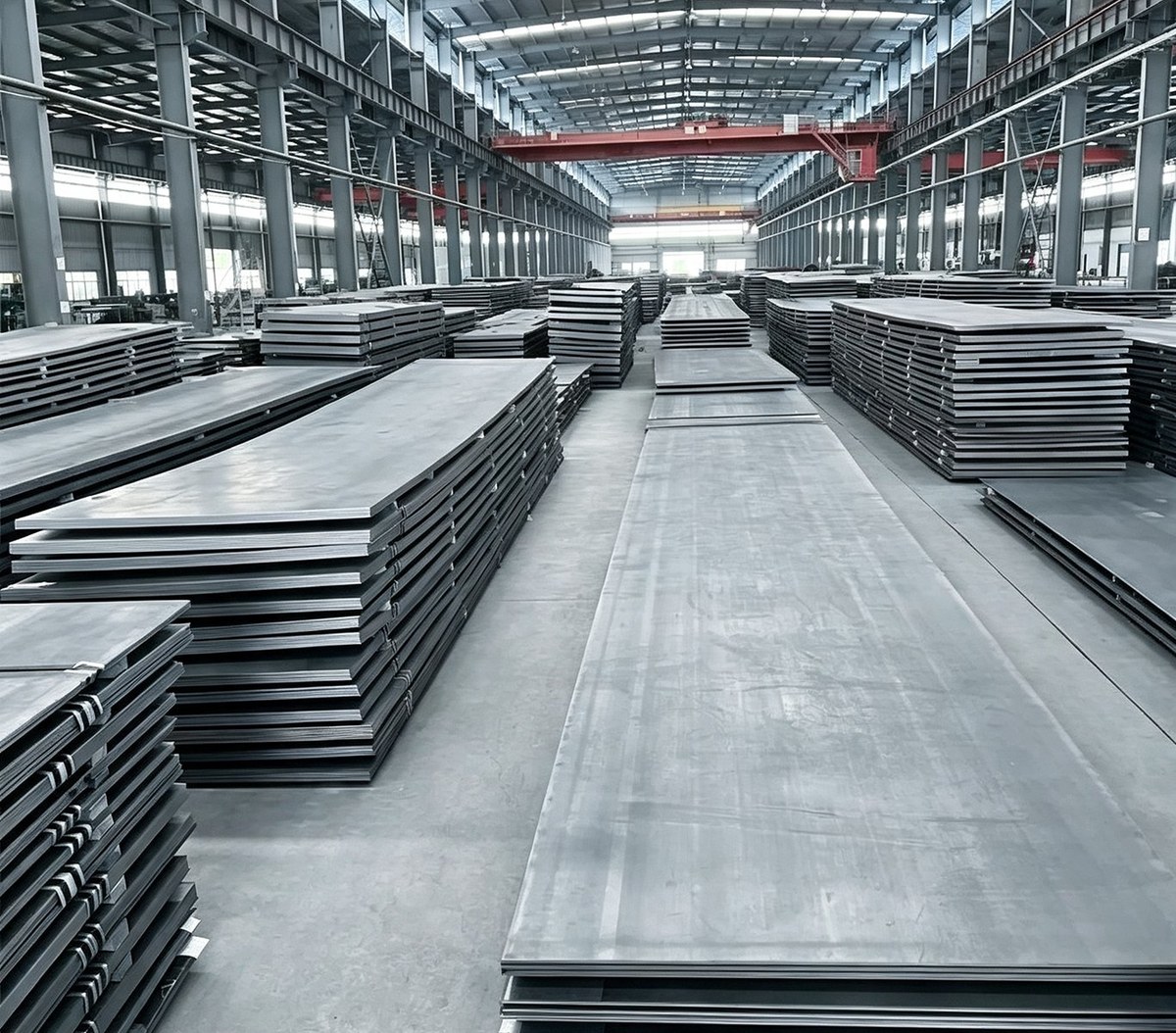
Steel plate refers to flat-rolled steel products with a rectangular cross-section, typically delivered as individual sheets rather than coils. Steel plate is one of the most versatile and widely used steel products, serving as the fundamental material for construction, shipbuilding, pressure vessels, bridges, machinery manufacturing, and energy infrastructure.
- Classification by Thickness (according to GB/T 15574 and industry practice):
- Medium Plate: Thickness from 3 (or 4) mm to 20 mm
- Heavy Plate: Thickness from 20 mm to 60 mm
- Extra-Heavy / Ultra-Thick Plate: Thickness from 60 mm to 600 mm (internationally up to 700 mm)
In commercial practice, the term "medium and heavy plate" encompasses thicknesses from approximately 6 mm to over 100 mm.
Product Types and Series
1 By Application / End-Use Series
- Leading steel mills offer diversified product portfolios covering all major industrial sectors:
| Product Series | Key Applications |
|---|
| Ship Plate & Offshore Engineering Steel | Ship hulls, offshore platforms, marine equipment |
| Boiler & Pressure Vessel Steel | Boilers, pressure vessels, storage tanks for high-pressure and high-temperature service |
| Pipeline Steel | Oil and gas transmission pipelines, high-pressure gas transmission |
| Structural Steel for Building & Bridge | High-rise buildings, stadiums, bridges, heavy-load structures |
| Wind Power Steel | Wind tower structures, offshore wind turbine foundations |
| Machinery Steel | Engineering machinery, heavy equipment frames, machine tools |
| Wear-Resistant Steel | Mining equipment, excavator buckets, dump truck bodies, crushers |
| Mold Steel | Plastic molds, die casting dies, automotive stamping dies |
| Ni-Series Low-Temperature Steel | LNG storage tanks, cryogenic equipment, low-temperature service |
| Hydroelectric Steel | Hydropower penstocks, turbine components, dam structures |
| Weathering / Corrosion-Resistant Steel | Exposed structures, bridges, railway rolling stock, shipping containers |
2 By Manufacturing Process
| Product Type | Description | Applications |
|---|
| Hot-Rolled Plate | Produced by rolling slabs at elevated temperatures; standard product for most applications | General structural, shipbuilding, pressure vessels, machinery |
| Controlled-Rolled Plate | Precisely controlled rolling temperatures and reduction ratios for enhanced properties | High-strength structural steel requiring optimized grain structure |
| Heat-Treated Plate | Subjected to normalizing, quenching & tempering, or other heat treatments | Boiler & pressure vessel steel, wear-resistant steel, high-strength steel |
Steel Grades and Materials
1 Chinese Standard Grades
| Grade Series | Standard | Yield Strength (MPa) | Applications |
|---|
| Q235A/B/C/D | GB/T 3274 | ~235 | General structural applications |
| Q275A/B/C/D | GB/T 3274 | ~275 | Higher-strength general structures |
- High-Strength Low-Alloy Structural Steels
| Grade Series | Standard | Yield Strength (MPa) | Applications |
|---|
| Q345B/C/D/E | GB/T 3274 | ~345 | Standard high-strength structural applications |
| Q390, Q420, Q460 | GB/T 3274 | 390–460 | Heavy structural applications, higher strength requirements |
| Q550, Q620, Q690 | GB/T 3274 | 550–690 | Ultra-high-strength applications |
- Boiler & Pressure Vessel Steels
| Grade Series | Standard | Applications |
|---|
| Q245R | GB 713 | Boilers, pressure vessels at moderate temperatures |
| Q345R | GB 713 | Boilers, pressure vessels requiring higher strength |
| Q370R, Q410R, Q420R | GB 713 | Heavy-wall pressure vessels, high-temperature service |
| Grade Series | Applications |
|---|
| A, B, D, E (General Strength) | Ship hull structures, general marine applications |
| AH32, AH36, AH40 (High Strength) | High-strength hull structures for large vessels |
| DH32, DH36, DH40 (High Strength) | High-strength hull structures for demanding conditions |
| EH32, EH36, EH40 (High Strength) | High-strength hull structures for arctic and heavy-duty applications |
Certification: All ship plate grades are certifiable by leading international classification societies including CCS, ABS, LR, BV, DNV, GL, RINA, NK, and KR.
| Grade Series | Standard | Applications |
|---|
| Q345qC/D/E | GB/T 714 | Bridge structural members, heavy-load crossings |
2 European Standard Grades (EN Equivalents)
European standards (EN 10025, EN 10225, EN 10028, etc.) provide comprehensive specifications for structural, pressure vessel, and offshore steels:
- Structural Steels (EN 10025)
| Grade | Yield Strength (MPa) | Impact Temperature | Applications |
|---|
| S235JR/J0/J2 | 235 | 20°C / 0°C / –20°C | General structural applications |
| S275JR/J0/J2 | 275 | 20°C / 0°C / –20°C | General structural, higher strength |
| S355JR/J0/J2/K2 | 355 | 20°C / 0°C / –20°C | Standard high-strength structural steel |
| S420M/ML, S460M/ML | 420–460 | –20°C / –50°C | High-strength structural, thermomechanical rolled |
| S500M/ML, S550M/ML | 500–550 | –20°C / –50°C | Ultra-high-strength structural applications |
- EN 10025 Notation:
- JR: Charpy impact 27J at 20°C
- J0: Charpy impact 27J at 0°C
- J2: Charpy impact 27J at –20°C
- K2: Charpy impact 40J at –20°C
- M: Thermomechanical rolled
- ML: Thermomechanical rolled with low-temperature impact properties
- Pressure Vessel Steels (EN 10028)
| Grade | Characteristics | Applications |
|---|
| P235GH, P265GH | Non-alloy pressure vessel steel | Moderate-temperature pressure vessels |
| P295GH, P355GH | Higher-strength pressure vessel steel | High-pressure boilers and vessels |
| 16Mo3 | Molybdenum alloyed for elevated temperature | Boilers, heat exchangers, elevated-temperature service |
| 13CrMo4-5 | Chrome-molybdenum alloy | High-temperature pressure vessels |
- Shipbuilding Steels (EN 10225 / Classification Society Rules)
EN 10225 specifies weldable structural steels for fixed offshore structures, with equivalent grades to the AH/DH/EH series:
| EN Grade | Equivalent Grade | Yield Strength (MPa) |
|---|
| S355G1/G2 | Corresponds to AH/DH/EH36 | 355 |
| S355G5/G6 | Enhanced offshore grade | 355 |
| S420G1/G2 | High-strength offshore grade | 420 |
| S460G1/G2 | Ultra-high-strength offshore grade | 460 |
- Steels for Low-Temperature Service (EN 10028-4)
| Grade | Impact Temperature | Applications |
|---|
| P215NL, P265NL | –40°C to –50°C | Low-temperature pressure equipment |
| P355NL1, P355NL2 | –40°C to –60°C | Higher-strength low-temperature service |
| 13MnNi6-3, 15NiMn6, 12Ni14, X12Ni5, X10Ni9 | Down to –196°C | Cryogenic service including LNG storage |
3 Comparison of Chinese and European Grades
| Chinese Grade | European Equivalent (EN) | Application |
|---|
| Q235B | S235JR / S235J0 | General structural |
| Q345B | S355JR / S355J0 | High-strength structural |
| Q345q | S355N / S355NL | Bridge construction |
| Q245R | P235GH / P265GH | Pressure vessels |
| Q345R | P295GH / P355GH | Boilers and pressure vessels |
| Q420 / Q460 | S420M / S460M | High-strength structural |
| 9Ni / 5Ni Series | X10Ni9 / X12Ni5 | Cryogenic LNG service |
Dimensions and Specifications
1 Full Range of Sizes
| Dimension | Standard Range | Extended / Special Range |
|---|
| Thickness | 6 – 150 mm | Up to 650 mm (ultra-thick) |
| Width | 1,500 – 3,250 mm | Up to 4,600 mm (special rolling) |
| Length | 5,000 – 15,000 mm | Up to 27,000 mm (special order) |
2 Thickness Classification Summary
| Category | Thickness Range | Typical Applications |
|---|
| Medium Plate | 3 – 20 mm | Ship decks, building floors, light structures |
| Heavy Plate | 20 – 60 mm | Ship hulls, pressure vessels, heavy structures |
| Extra-Heavy Plate | 60 – 150 mm | Heavy machinery, boilers, offshore platforms |
| Ultra-Thick Plate | 150 – 650 mm | Military equipment, nuclear components, heavy forgings |
3 Width Capability
| Width Category | Range | Applications |
|---|
| Standard Width | 1,500 – 3,250 mm | Most structural and industrial applications |
| Wide Plate | 3,250 – 4,100 mm | Wide structures, large-diameter pipe manufacturing |
| Extra-Wide Plate | Up to 4,600 mm | Special structural applications, plate girders |
Applicable Standards
1 Chinese Standards
| Standard | Description |
|---|
| GB/T 3274 | Carbon structural steels and low-alloy high-strength structural steels for general use |
| GB 713 | Steel plates for boilers and pressure vessels |
| GB/T 714 | Steel plates for bridges |
| GB/T 5313 | Steel plates with through-thickness characteristics (Z-direction properties) |
| GB/T 19879 | High-performance structural steel plates for buildings |
2 European Standards
| Standard | Description |
|---|
| EN 10025 | Hot-rolled products of structural steels (Parts 1–6 covering general, thermomechanical, and normalized/normalized-rolled steels) |
| EN 10028 | Flat products made of steels for pressure purposes (Parts 1–7 covering general, non-alloy, alloy, nickel alloy, and stainless steels) |
| EN 10225 | Weldable structural steels for fixed offshore structures (Parts 1 and 2) |
| EN 10164 | Steel products with improved deformation properties perpendicular to the surface (Z-direction) |
3 International and Other Standards
| Standard | Description |
|---|
| ASTM A36 | Carbon structural steel (international equivalent) |
| ASTM A516 | Pressure vessel steel for moderate and lower-temperature service |
| ISO 630 | Structural steels |
| ISO 9328 | Flat steel products for pressure purposes |
Heat Treatment and Delivery Conditions
Steel plates are available in various heat treatment and delivery conditions to achieve specific mechanical properties:
| Condition | Symbol / Description | Typical Applications |
|---|
| As-Rolled (AR) | Rolled at elevated temperatures and cooled; no subsequent heat treatment | General structural applications with standard requirements |
| Controlled-Rolled (CR / TM) | Rolling temperature and reduction precisely controlled; thermomechanical rolling | High-strength structural steels, fine grain structure |
| Normalized (N) | Heated above transformation temperature and air-cooled; grain refinement and uniform properties | Boiler & pressure vessel steels, structural steels requiring consistent impact properties |
| Normalized-Rolled (N-rolled) | Rolling process equivalent to normalization; no separate heat treatment | Structural and pressure vessel steels |
| Quenched & Tempered (QT) | Quenched (water or oil) and tempered to achieve high strength with good toughness | High-strength structural steels, wear-resistant steels |
| Normalized + Tempered (NT) | Combination of normalization and tempering | Heavy-duty structural applications, pressure vessels |
| Annealed (A) | Heated and slowly cooled; maximum ductility | Mold steels, forming applications |
Z-Direction Properties (EN 10164 / GB/T 5313):
Available on special order for applications requiring resistance to lamellar tearing:
- Z15: 15% minimum reduction of area
- Z25: 25% minimum reduction of area
- Z35: 35% minimum reduction of area (highest ductility)
Key Applications and Industries
1 Shipbuilding and Offshore Engineering
- Hull structural steel (A, B, D, E grades and AH/DH/EH high-strength grades)
- Offshore platform structural steel (EN 10225 grades)
- Subsea and marine equipment components
Notable Applications: Ultra-deepwater drilling platforms, very large ore carriers (VLOCs), cutter suction dredgers, fixed offshore platforms.
2 Building and Bridge Construction
- Building structural steel (columns, beams, floor plates)
- Bridge steel (main structural members, heavy-load crossings)
Notable Applications: Large-scale sports venues, high-speed railway stations, major bridges, high-rise building structures.
3 Boilers and Pressure Vessels
- Boiler drums and components (Q245R, Q345R, P235GH, P355GH)
- Pressure vessels for chemical and petrochemical processing
- Storage tanks for LNG and other cryogenic fluids (9Ni, 5Ni, X10Ni9)
4 Energy and Pipeline Infrastructure